
Editor - Jackie
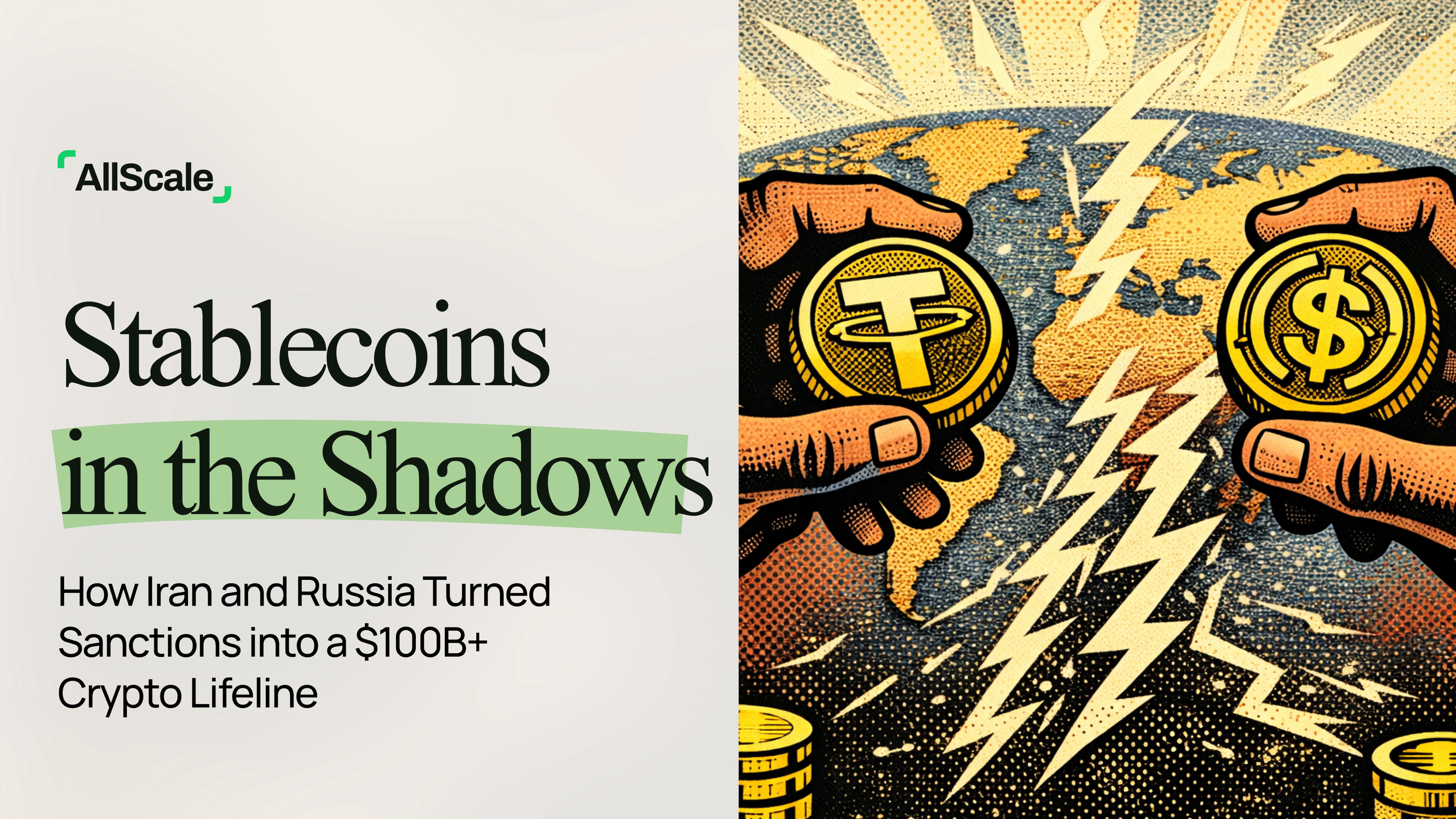
When traditional payment rails are taken away, money does not stop moving. Instead, it shift to alternate routes. That is exactly what is unfolding in global conflicts occurring in Iran and Russia, where nations are turning to stablecoin rails as payment continuity tools to bypass sanctions.
Iran: From $1.7M seizure to $500M central-bank war chest
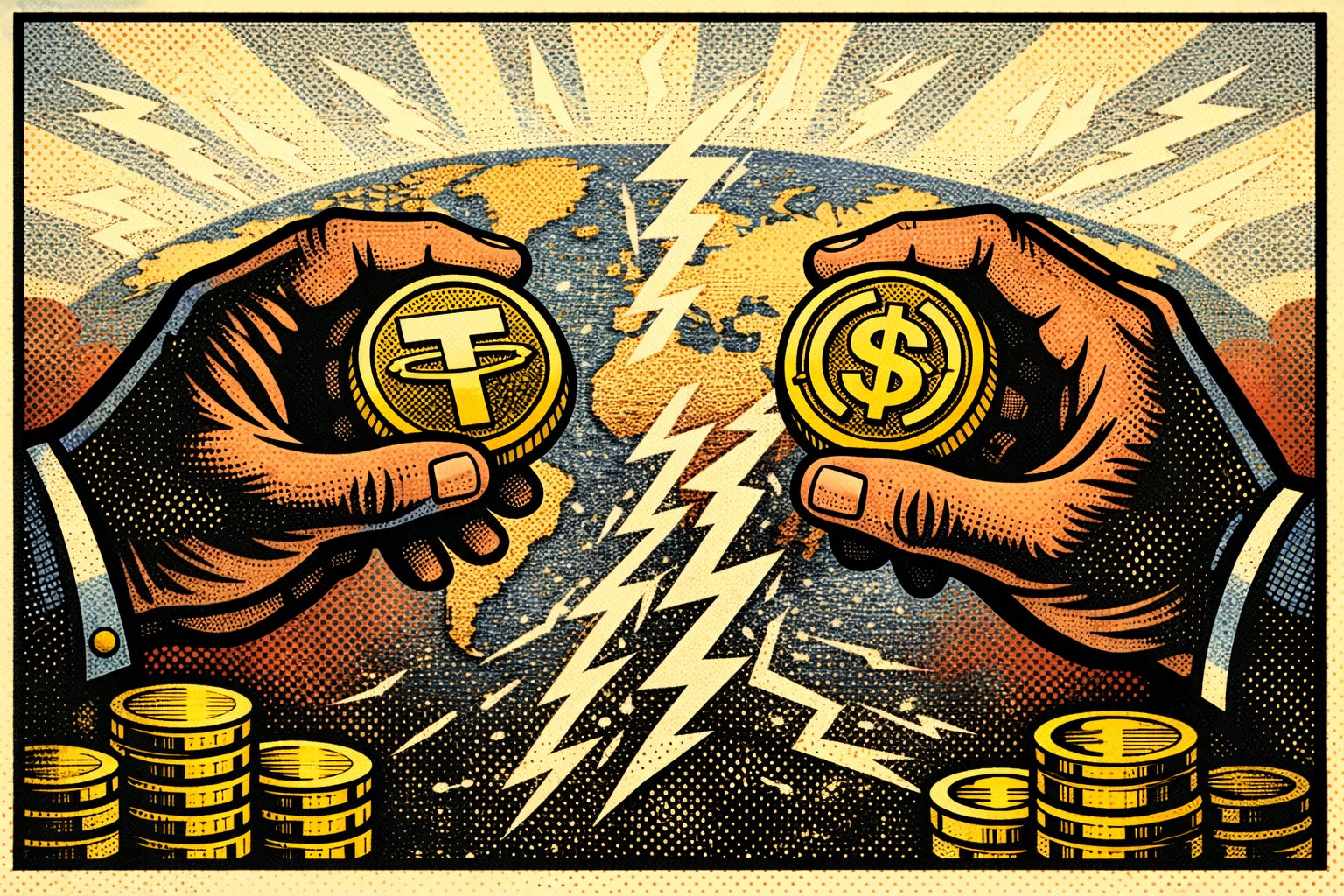
The first time stablecoin-related escalation occurred in Iran was in June of 2023, when the Israeli government seized $1.7 million of funds in USDT on the TRON network. Funds were being transferred from financial facilitators to brokers, and then to Hezbollah-owned addresses at certain exchanges.Fast-forwarding to December of 2024, another 84 Tron wallets were linked by Israeli authorities to Iran-linked militants showing how it is very difficult to monitor these alternative payment channels. The next year or so was characterized by the same back and forth.
Over $500 million in USDT was acquired by Iran’s central bank. These funds were allegedly used to support the domestic currency (the rial) and facilitate international trade. This was an “anti-sanctions” banking mechanism that minimizes their risk of the Iranian government holding traditional U.S. Dollar accounts. With the newest escalations last month within the Gulf Region, there was a spike in crypto usage (stablecoins-inclusive) for not just sanctions evasion, but also for “lawful” users turning to crypto as a lifeline.
Russia: From $28M freeze to $100B industrial-scale evasion
A similar story was unfolding in Russia, which has been pelted by sanctions ever since the Russo-Ukrainian war broke out. In 2022, Tether became central to Russia’s procurement chain as importers were able to convert rubles into USDT, route it through intermediaries, and then pay off foreign suppliers. This became the concept of “shadow trade”.
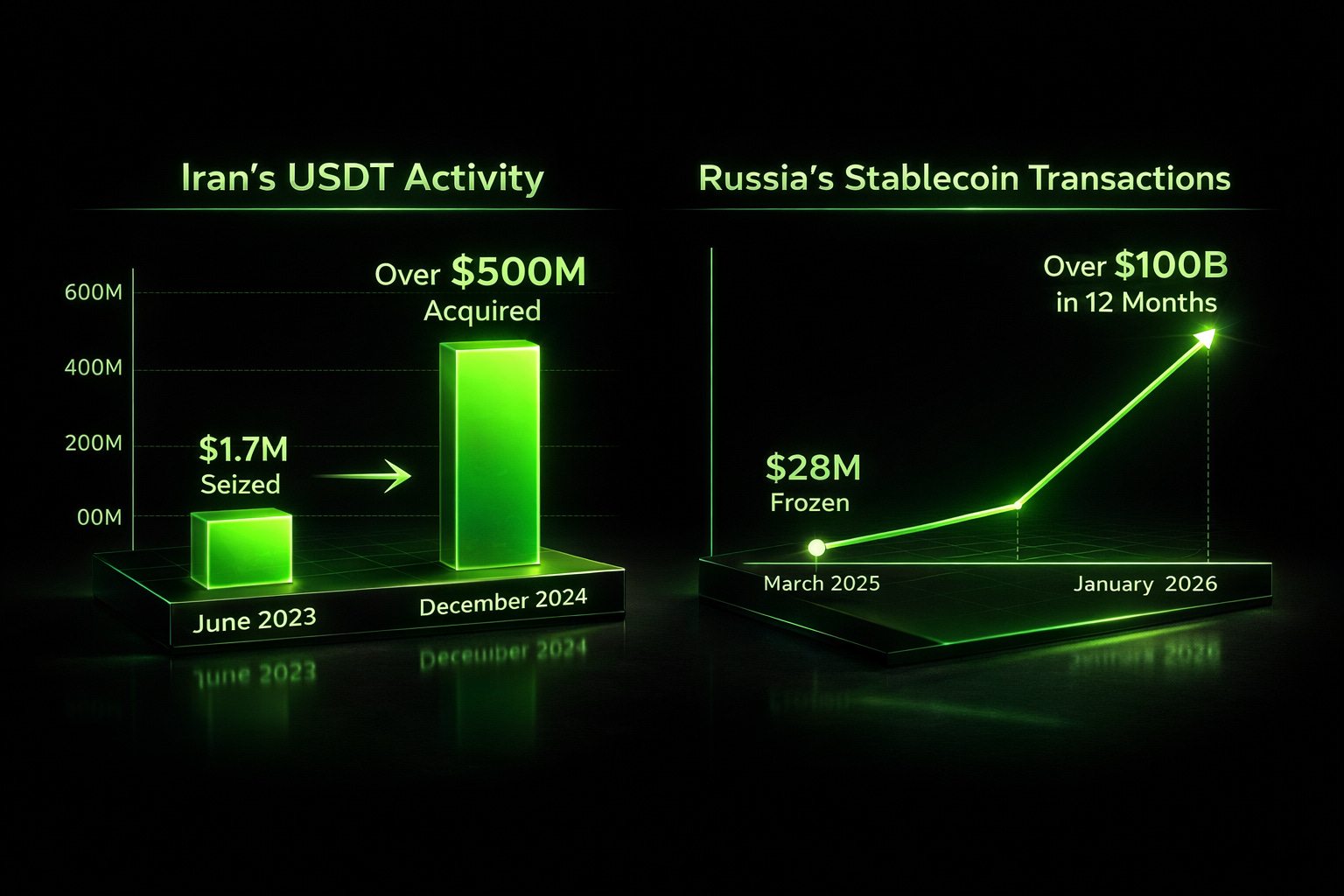
By March 2025, issuer-level enforcement was taking place when Tether froze ~$28M in USDT connected to Garantex, a Russian cryptocurrency exchange. . In January of 2026, the Russia-linked stablecoin A7A5 processed over $100B in transactions in less than 12 months. Clearly, these sanctions-era-borne payment rails are no longer just ad hoc workaroundss. Although some stablecoin transactions were used to buy weapons, many others involve regular Russian businesses participating in international transactions. Compared to Iran, Russia’s use of stablecoin payment rails during trying times is clearly more structured, but the one commonality is that stablecoins take center stage in both scenarios. Now that leads to the question...
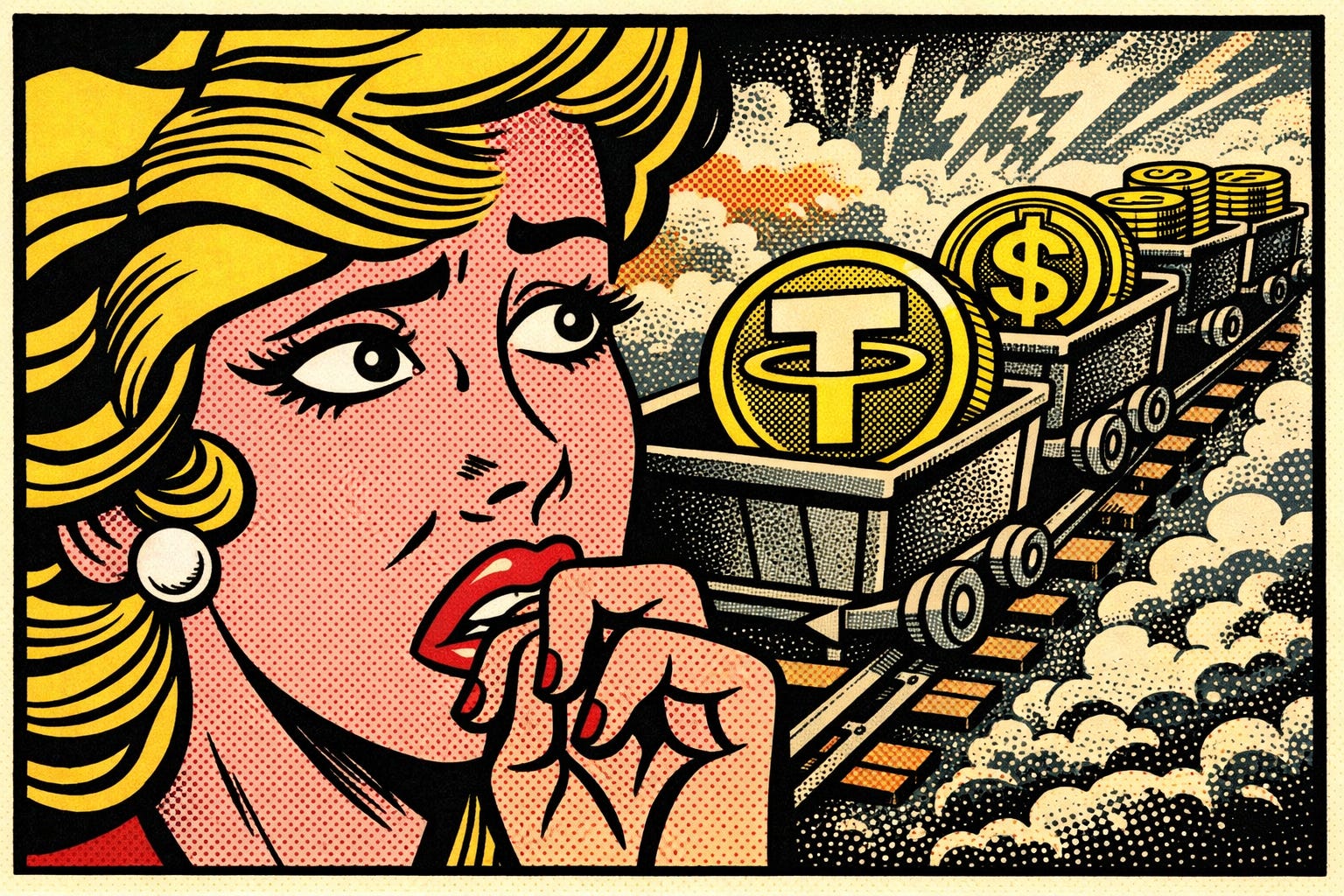
Why stablecoins win under pressure?
Simple economics: When the “supply” of banks and other formal trade channels is constrained for various reasons, the “demand” for cross-border dollar settlement does not disappear. Stablecoins satisfies that demand perfectly.
But here are the insights most coverage misses:
- On-chain transparency is a double-edged sword. Every transfer is public, enabling seizures (Israel’s $1.7M, Thether’s $28M) and enforcement. Yet the cat-and-mouse continues because new rails (A7A5, local OTCs) pop up faster than freezes can scale.
- “Dedollarization” irony: Efforts to escape USD dominance are actually supercharging dollar-pegged stablecoin adoption. They are the perfect backup rail for countries like Iran and Russia, and that is probably the core reason why stablecoins keep on emerging as payment rails under pressure. These conflict-driven flows are dramatic but still a tiny slice of global stablecoin volume. They help with every-day functions, ranging from payroll, checkouts, and invoicing. They are an undisposable tool of support for SMBs and AI agents and freelancers alike.
- Additionally, they have helped connect people from countries that often lack traditional payment rails to more opportunities around the globe. That is also exactly what we are building at AllScale (feel free to take a look at our website to learn more!).

We also see a lot of light ahead for the path forward. Policy can reduce misuse without killing the utility of stablecoins. Companies such as Tether and Binance have all been actively taking steps toward curbing terrorism-linked transactions occurring in Iran and Russia. Moreover, many features such as KYT (know-your-transaction) can ensure a safer environment. More and more country-level regulations are also getting pushed out to make sure we are all using stablecoins safely (check out our GENIUS Act timeline article if you haven’t yet).
Ultimately, Iran and Russia didn’t break the system. They exposed its rigidity—and stablecoins filled the void. The same technology that helps states survive sanctions is the one empowering freelancers, SMBs, and AI economies worldwide. The future isn’t less stablecoin usage. It’s safer, smarter stablecoin usage. Positioning self-custody as the ultimate empowerment tool for everyday users is the way to go, and that is what we currently see the entire industry moving towards on both national and institutional levels.
Thanks for reading AllScale Weekly: Stable Scoop! Subscribe for free to receive new posts and support my work.