Learn the best ways to pay global contractors faster and cheaper, from stablecoin payouts and local rails to contractor management platforms, Wise, Payoneer, and AP automation.

Remote teams give companies access to stronger talent, faster hiring, and more flexible operating costs. The challenge comes after the contract is signed: how do you pay global contractors quickly, affordably, and reliably without creating extra finance work or compliance risk?
Traditional international wires still work, but they are rarely the fastest or cheapest option for recurring contractor payments. A wire may pass through intermediary banks, trigger recipient-side deductions, and expose both the company and the contractor to unclear FX spreads. Modern alternatives now include local bank rails, contractor management platforms, stablecoin payouts, bulk payment tools, and accounts payable automation. Ultimately, aligning these features with your organizational size ensures a smooth, long-term strategy for managing cross-border payments for freelancers.
For many SMBs, the best first step is to move away from traditional SWIFT wires and use local payment rails wherever possible. Local rails can reduce intermediary-bank fees, improve delivery speed, and make the contractor experience feel more like a domestic payment.
Wise Business is one of the most practical options for teams that want to pay global contractors without adopting a full HR platform. Wise supports multi-currency business accounts, transparent FX, and international transfers to many countries. In its guide on paying international contractors, Wise highlights features such as BatchTransfer, which can pay up to 1,000 invoices in one go, and the ability to send, hold, and manage funds in multiple currencies.
This approach is especially useful when your contractors prefer to receive money directly in their bank accounts. Instead of asking every freelancer to join a new platform, you can pay into local accounts where available, keep FX costs visible, and avoid the uncertainty of correspondent banking.
Wise is best for startups, agencies, and SMBs that pay global contractors regularly but do not yet need a complete contractor compliance suite. It is also a strong choice when you want a relatively simple finance workflow: collect invoices, approve payments, upload or batch recipients, and send funds in the contractor’s preferred currency.
The limitation is that Wise is primarily a payment and money-management tool, not a contractor-of-record platform. If you need localized contracts, misclassification support, tax document automation, and HR approvals, you may need to pair Wise with separate legal and HR processes.
Stablecoin payroll are becoming a serious option for global teams that want faster settlement, fewer banking delays, and dollar-denominated payouts across borders. For contractors in countries where USD access is limited, or where bank transfers are slow and expensive, stablecoin payouts can be a faster and cheaper way to receive funds.
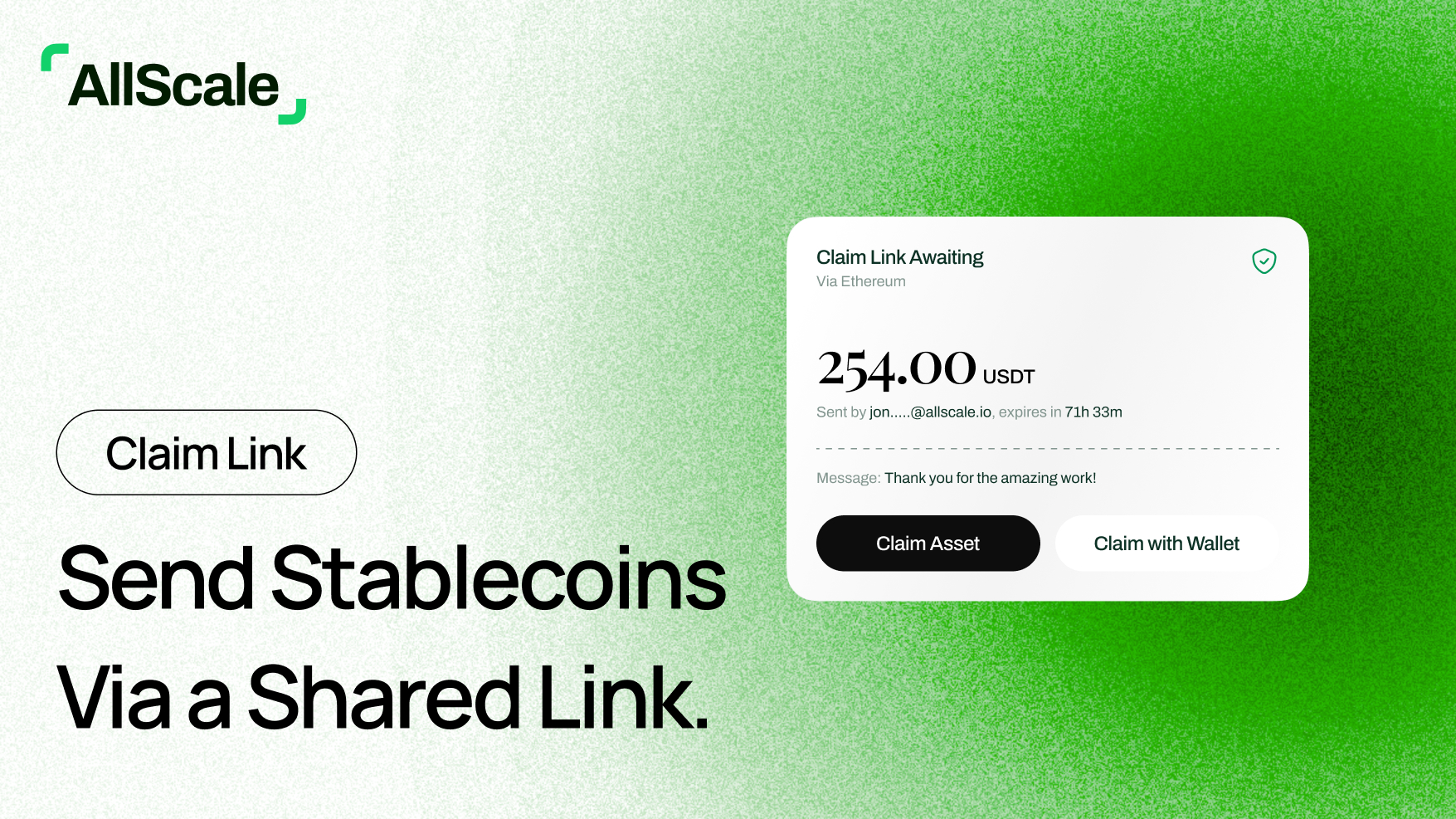
AllScale is a strong fit for microbusinesses and distributed teams that want to pay or receive global contractor payments in stablecoins. AllScale positions itself as a self-custody stablecoin neobank for micro businesses, offering a global dollar account in seconds without bank applications, seed phrases, or borders. Its site describes a simple workflow: create payment links for clients or payers anywhere, let them pay without needing an AllScale account or crypto wallet, and receive funds in USDT or USDC that can be held or sent instantly.
For teams that frequently pay designers, developers, creators, community managers, or offshore operations contractors, this model can remove a lot of cross-border friction. Instead of waiting for international banking cutoffs, contractors can receive dollar-linked value quickly and decide when to hold, convert, or spend. Optimizing this exact disbursement workflow serves as an excellent practical fallback for a complete AllScale Pay introduction.
AllScale is best for remote-first microbusinesses, Web3-adjacent teams, creator businesses, agencies, and global contractor networks that already understand stablecoin workflows or want a simpler way to start using them. Its product links also include invoice generation and payroll management, which makes it relevant for teams trying to organize recurring contractor payments beyond one-off transfers.
The main caveat is that stablecoin payments require operational discipline. Companies should confirm local legality, tax treatment, contractor consent, wallet controls, and internal approval policies before making stablecoin payouts part of their standard contractor payment process. AllScale also states that it is a financial technology developer rather than a bank, so finance teams should treat it as a modern payment tool rather than a replacement for every banking or compliance function.
If your biggest problem is not just payment speed but the whole contractor lifecycle, a contractor management platform may be the better choice. These platforms combine onboarding, contracts, invoices, payment approvals, and country-specific compliance workflows.
Deel’s global payment tools guide argues that the best tools combine fast payments, low fees, and compliance support in one platform. Deel Contractor supports payments in 150+ countries and 200+ currencies, with automated invoices, tax form generation such as 1099 and W-8BEN, multiple payout methods, and compliance support for distributed teams.
Remote Contractor Management is another strong option for companies that want to centralize global contractor operations. Remote highlights automated onboarding, localized contracts, invoice approval, auto-pay, recurring invoices, real-time payment visibility, and payments across 200+ countries and jurisdictions. Remote also promotes stablecoin payouts for contractors as a near-instant global payment option, which may appeal to teams that want both compliance workflows and modern payout methods.
Contractor management platforms are best for companies that need to pay global contractors while reducing misclassification risk, standardizing contracts, and giving HR, finance, and legal teams a shared workflow. They are particularly useful once your contractor base spans many countries, entities, currencies, and tax requirements.
The trade-off is cost. A contractor management platform is usually more expensive than sending money through a standalone transfer service. That cost can be worthwhile if it replaces manual contract templates, invoice chasing, tax form collection, and compliance reviews. But if you only pay a few low-risk contractors, a lighter payment tool may be enough.
Payoneer has long been popular among freelancers, marketplaces, agencies, and cross-border service businesses. It is useful when your contractors already use Payoneer, want access to multi-currency receiving options, or work across digital platforms that support Payoneer withdrawals.
In its resource on efficient ways to pay international contractors, Payoneer notes that businesses can pay international contractors through methods such as wire transfers, payment platforms, or contractor management systems. It also describes Payoneer Workforce Management as an all-in-one option and notes support for contractor payments in 70 currencies.
Payoneer is best for businesses paying freelancers, agencies, marketplace sellers, content contractors, and service providers who already operate across international payment networks. It can be especially convenient when both sides are familiar with Payoneer and the contractor wants flexible receiving or withdrawal options.
The limitation is ecosystem dependency. Contractors may need to maintain a Payoneer account and understand withdrawal fees, currency conversion, and local bank transfer availability. For companies that need more robust contractor compliance, Payoneer may need to be part of a broader contractor management process.
When contractor payments become a finance operations problem, AP automation can be more valuable than a simple transfer tool. This is common for companies that pay large pools of contractors, affiliates, creators, suppliers, marketplace sellers, or service providers across many countries.
Tipalti’s guide to paying international contractors emphasizes automation, payee onboarding, payment method choice, tax compliance, sanctions screening, and reconciliation. Tipalti supports local bank transfers such as SEPA, BACS, EFT and other local rails, Global ACH, PayPal, SWIFT wire transfers, US domestic ACH, and checks. It also highlights support for 200+ countries, 120+ currencies, and 50+ payment methods.
This type of platform can help finance teams reduce failed payments, standardize tax documentation, and close the books faster. Instead of manually checking bank details, collecting tax forms, reviewing sanctions risks, and reconciling spreadsheets, the payment workflow becomes more controlled and auditable.
Tipalti is best for finance-led organizations with high payout volume, complex approval flows, tax reporting needs, or ERP integration requirements. It is often more relevant for marketplaces, ad networks, platforms, SaaS partner programs, and larger remote-work businesses than for very small teams.
The trade-off is implementation complexity. AP automation is powerful, but it may be too heavy if you only need to pay a small group of contractors every month.
PayPal remains one of the easiest ways to pay global contractors when both sides already have accounts. It is familiar, fast to start, and useful for occasional freelance work, urgent one-off payments, or contractors who specifically request it.
The advantage of PayPal is accessibility. Many freelancers already understand how to invoice, receive funds, and withdraw to a bank account. For small projects, that convenience may outweigh the cost.
However, PayPal can become expensive for recurring global contractor payments. Currency conversion spreads, receiving fees, withdrawal fees, and account limitations can reduce the contractor’s net pay. If you are paying the same contractors every month, it is usually worth comparing PayPal against local rails, Wise, Payoneer, or a contractor management platform.
PayPal is best for occasional, low-admin payments where convenience matters more than optimizing every basis point of FX and transaction cost. It is less ideal as the default method for a growing global contractor workforce.
International wire transfers are still widely used, but they are often not the best way to pay global contractors faster and cheaper. Wires can make sense for large transfers, jurisdictions where alternatives are limited, or contractors who require direct bank-to-bank payment from your existing business bank.
The problem is that wires can be slow and unpredictable. Wise explains in its contractor payment guide that SWIFT transfers may involve intermediary banks, added fees, and delivery delays. A contractor may receive less than expected because fees are deducted along the route, and the sending company may not have full visibility into the final cost.
International wires are best for large, occasional, or bank-mandated payments where the recipient expects a traditional transfer. They should not be the default choice for frequent small contractor payouts unless your bank offers unusually competitive international payment terms.
The cheapest payment method is not always the best one. Contractor payments affect trust, retention, compliance, and finance workload. A method that saves $5 in fees but creates delayed payments, missing tax forms, or reconciliation errors may cost more in the long run.
A good rule is to start with the lowest-friction method that still meets your compliance needs. For example, an agency with 10 contractors might use Wise for bank transfers and AllScale for contractors who prefer USDT or USDC. A scaleup with 80 contractors in 25 countries might use Remote or Deel for contracts and compliance, then standardize payout methods through the platform. A marketplace paying thousands of creators may need Tipalti-style mass payments and tax automation.
Before choosing a payment method, make sure your contractor process is legally and operationally sound. Paying faster is only useful if the payment is properly documented.
First, confirm worker classification. A contractor should not be managed like a full-time employee if local law would treat them as an employee. Misclassification can lead to penalties, back taxes, and employment disputes.
Second, collect the right tax forms. US companies commonly need W-8BEN or W-8BEN-E forms for foreign contractors and W-9 forms for US contractors. Platforms like Deel, Remote, and Tipalti can help automate this documentation, but the company is still responsible for choosing the right process.
Third, document the contract, scope, invoice, and payment approval. Every contractor payout should map to a signed agreement, an approved invoice, and a clear record of currency, amount, fees, and payment date.
Fourth, consider sanctions, restricted countries, and local payment rules. Cross-border payments may require screening against sanctions lists and compliance with local regulations. This matters even if the payment method itself is fast.
Finally, define who pays fees. Contractors care about net amount received. If your company promises $2,000, but the contractor receives less after FX and fees, the payment method may damage trust even if the gross amount was technically correct.
For most SMBs, the best way to pay global contractors faster and cheaper is to use local bank rails or transparent FX tools for standard payouts, add stablecoin payment options for contractors who need faster dollar access, and upgrade to a contractor management platform when compliance and scale become more important than minimizing software fees.
If you want a simple starting point, use Wise Business for low-cost international transfers and batch payments. If you work with stablecoin-ready contractors or global microbusinesses, AllScale offers a modern way to send and receive USDT/USDC payments without the delays of traditional banking. If you need contracts, onboarding, tax forms, and payment approvals in one place, platforms like Deel and Remote are stronger long-term systems.
The smartest payment strategy is not one tool for every situation. It is a payment stack that gives your contractors speed, your finance team visibility, and your company enough compliance control to keep scaling globally.
The cheapest method is often a local bank rail or transparent FX provider, especially when payments are recurring and contractors can receive money directly in local bank accounts. Wise is a common choice for this use case because it emphasizes transparent exchange rates and batch transfers. Stablecoin payments can also be cheaper and faster in certain corridors, but they require legal, tax, and contractor readiness checks.
When analyzing the efficiency of cross-border contractor payments with stablecoins, the speed advantage over legacy banking infrastructure becomes immediately apparent. Stablecoin payouts and certain digital wallet payments can be near-instant, while local bank rails may settle same day or within a few business days depending on the country. Traditional SWIFT wires are usually less predictable because intermediary banks and cutoff times can affect delivery.
It depends on the contractor’s preference, local currency stability, and the cost of conversion. Some contractors prefer local currency because they spend locally, while others prefer USD or USD-linked stablecoins to avoid local currency volatility. Always agree on the invoice currency and who absorbs FX fees before work begins.
Not always. A small team may be able to use Wise, Payoneer, PayPal, or AllScale with a separate contract and invoice process. However, once you hire contractors across multiple countries, a platform like Deel or Remote can reduce compliance risk by centralizing contracts, onboarding, tax forms, invoices, and payments.
Stablecoin legality depends on the jurisdictions involved, the contractor’s status, tax reporting rules, and company policy. Some teams use USDT or USDC successfully for global payouts, but employers should confirm local rules, document contractor consent, and maintain accurate tax and accounting records before adopting stablecoin payments.
If there are any questions regarding our platform's security compliance, volume-based pricing discounts, or technical support agreements, please do not hesitate to reach out to our dedicated account management team and contact sales.