Canada beat the U.S. to Bitcoin ATMs, spot Bitcoin ETFs, and even a central-bank CAD stablecoin — yet today the Canadian dollar rounds to zero on-chain. This article walks the four acts of the CAD-stablecoin story to explain how the country that was early on the tech somehow forgot to ship its own dollar.
The first Bitcoin ATM was in Vancouver. The first spot Bitcoin ETF was Canadian. Even CAD-Coin started early. So how did Canada miss stablecoins?
As a stablecoin neobank founder in Vancouver, I wonder about this a lot. So I decided to poke into the history timeline and see what our friends in Canada were and are building.
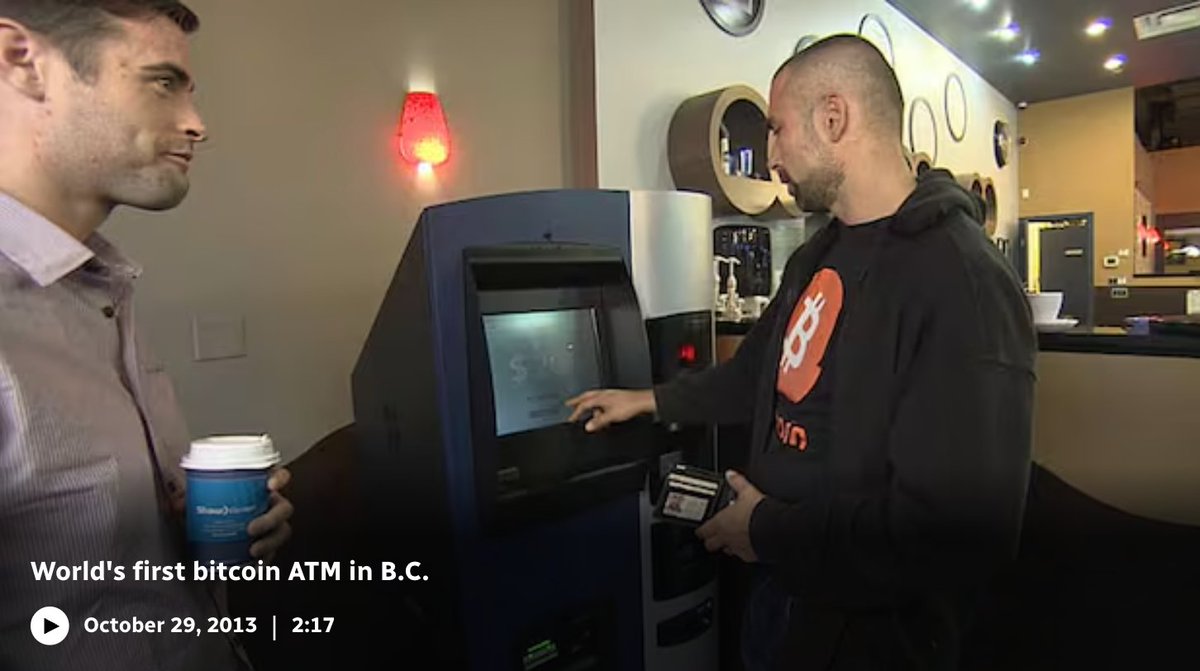
Vancouver got the world's first Bitcoin ATM in 2013, inside a downtown coffee shop. There was also Bitaccess who also started in the same year and grew to over 10K BTC ATMs. I was also fortunate enough to meet their founder Haseeb Awan @haseeb at a party in SF in the summer of 2025 when I just got started with building @allscaleio. We got inspired by him so much.
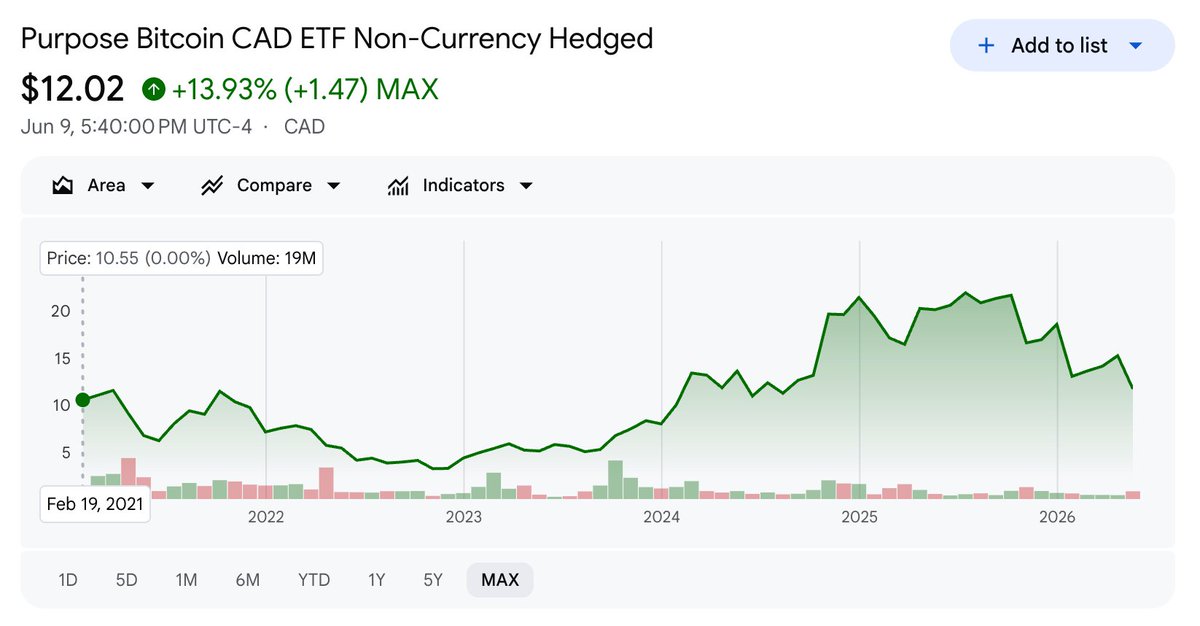
Eight years later, the Purpose Bitcoin ETF went live on the TSX while the SEC was still saying no to everyone in early 2021.
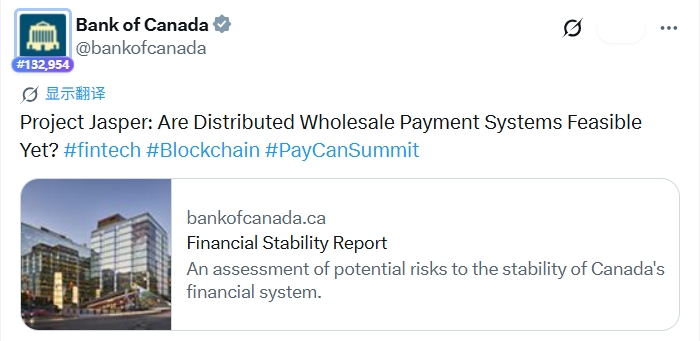
And before USDC even existed (which was launched in 2018), the Bank of Canada and other partner entities launched Project Jasper in 2016 to test an on-chain CAD-Coin for financial institutions. Canada was early to crypto in almost every way that mattered.
Now look at stablecoins.
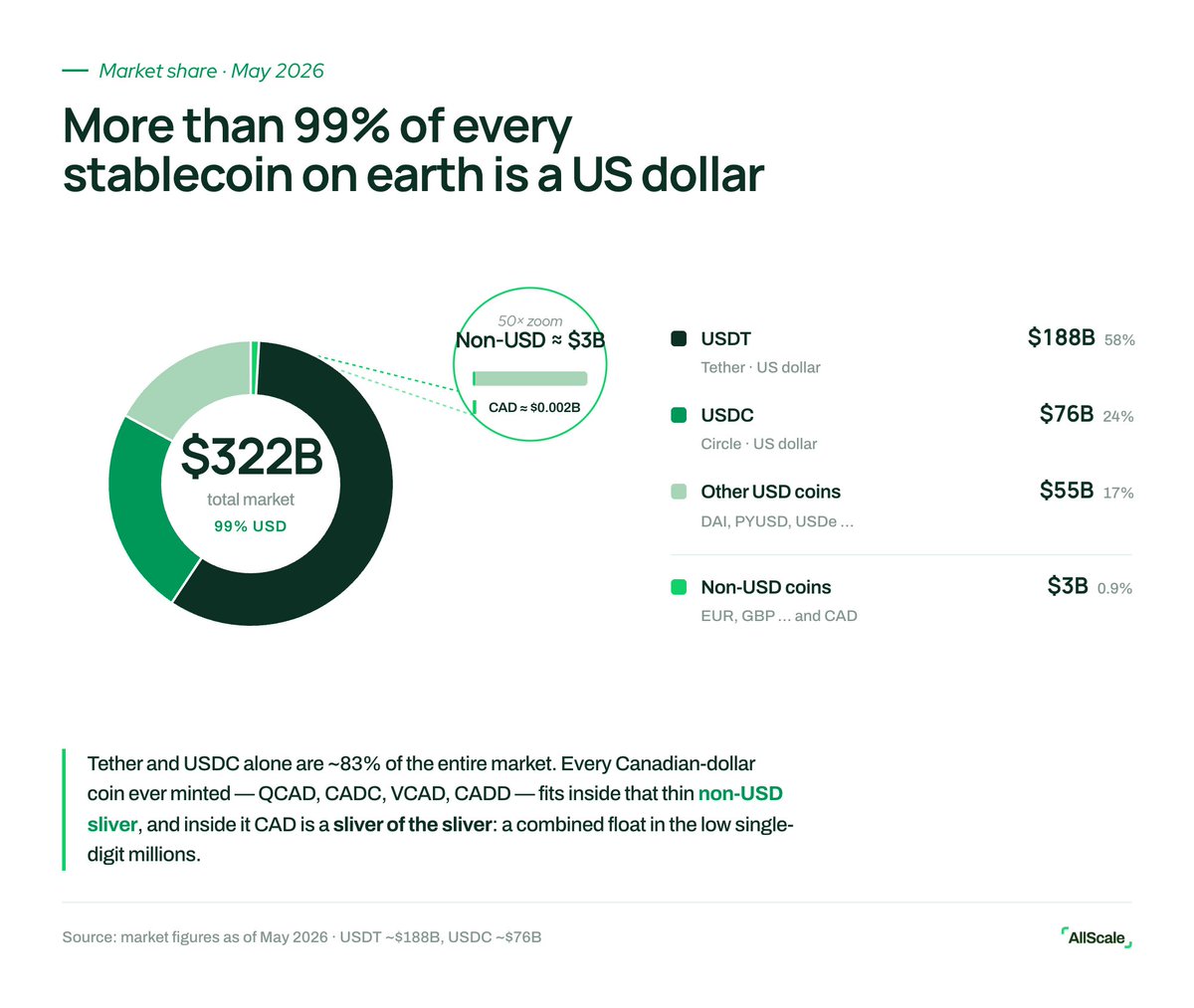
The market is about $322B today, bigger than the FX reserves of 95 countries.
The Canadian dollar's share? It rounds to zero.
All non-USD stablecoins combined are less than 1% of the market, and CAD is only a tiny piece of that tiny piece.
More than 99% of every stablecoin on earth is a US dollar. Tether ($188B) and USDC ($76B) are ~83% of the entire stablecoin market value by themselves.
Every Canadian-dollar coin ever minted (QCAD, CADC, VCAD, CADD) fits inside that thin little non-USD sliver. And inside that sliver, the CAD coins are a sliver of the sliver. Combined float: low single-digit millions of dollars.
Read that back. The country that beat the US to a Bitcoin ETF basically forgot to ship its own dollar.
That's the paradox. And the answer to "why" is way more interesting than "Canada slow." Canada wasn't slow on the tech. It was early. Let me walk you through what I found.
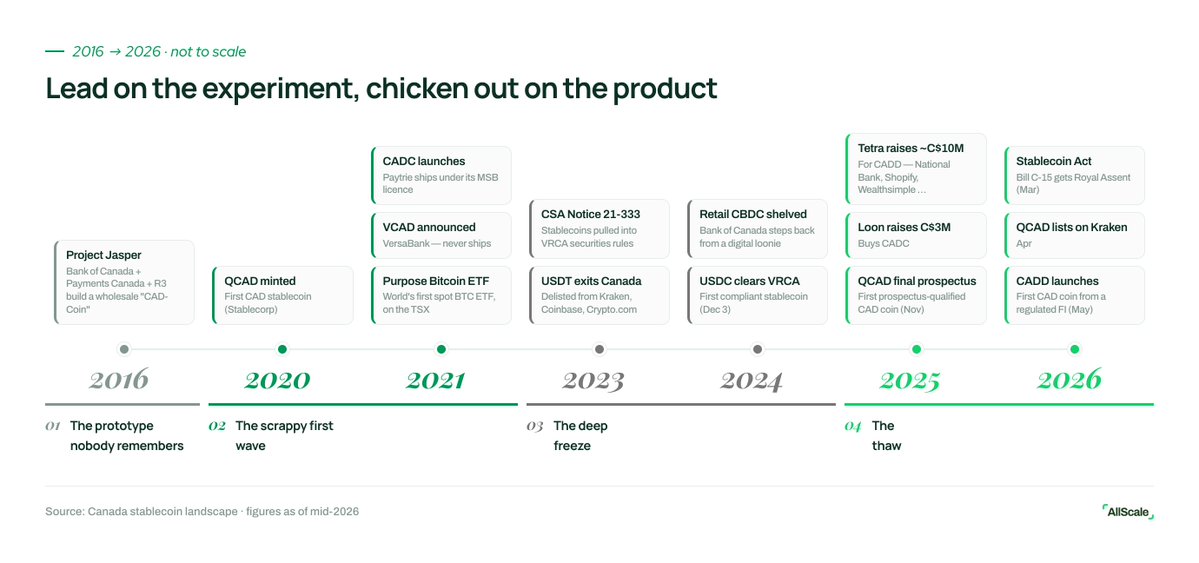
Four acts:
Act 1: the prototype nobody remembers (2016)
Plot twist: Canada's first CAD stablecoin wasn't built by some startup. It was built by the central bank.
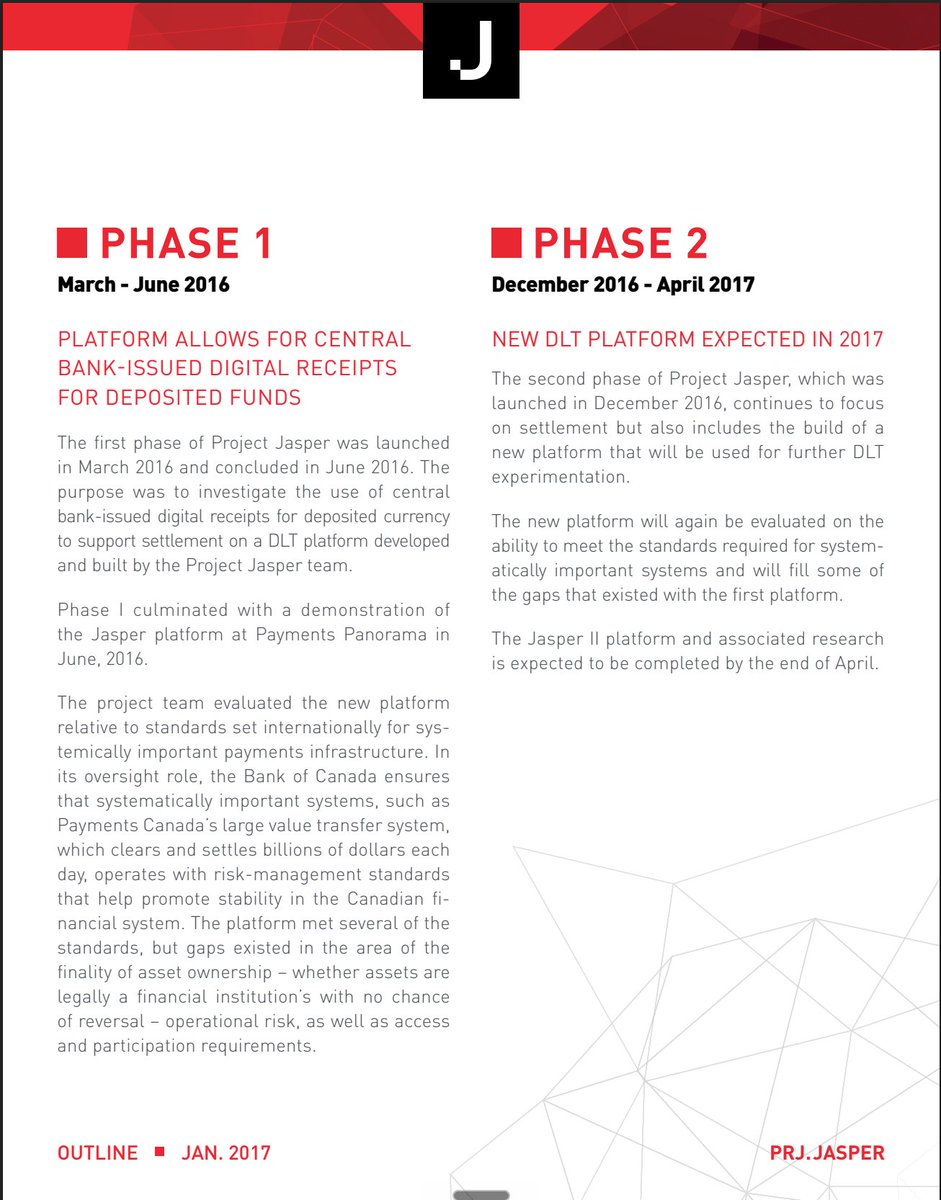
Project Jasper, March 2016. Bank of Canada + Payments Canada + R3 + seven Canadian financial institutions, building a wholesale settlement token nicknamed "CAD-Coin." Banks pledged collateral, the central bank issued a token against it, and they settled payments between each other by moving the token. Ran on Ethereum first, then moved to R3's Corda. A later phase even settled stocks.
It was never a consumer thing, and it quietly wound down. But it set the pattern Canada would run for the next decade: lead on the experiment, but missing... on the product.
Act 2: the scrappy first wave (2020-2021)
Three CAD coins in 18 months, each from a totally different corner of finance:
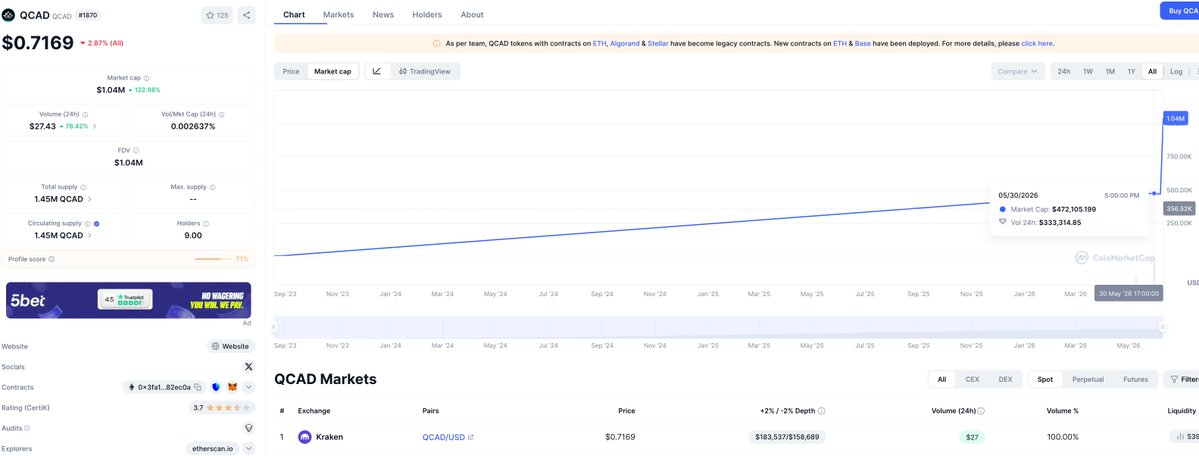
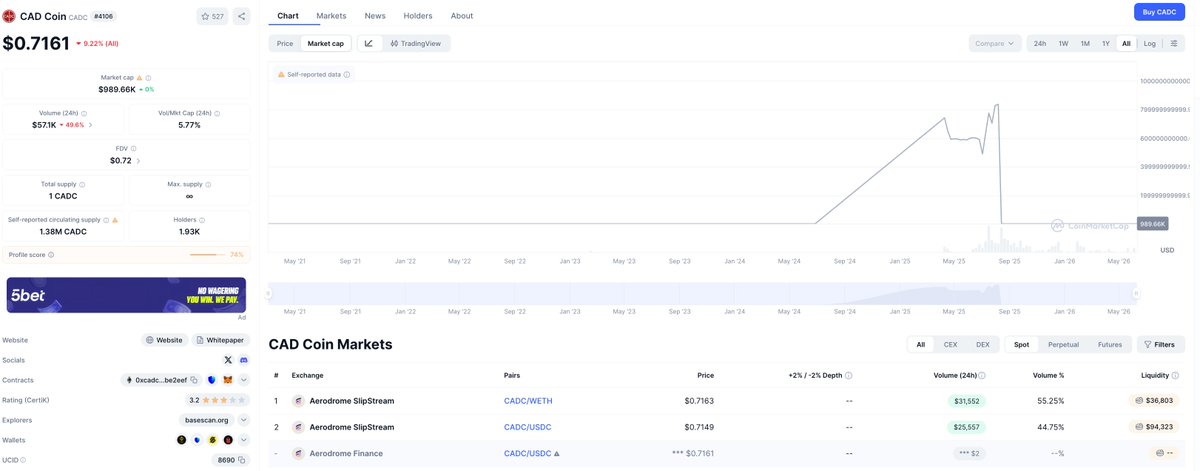
VCAD is the heartbreaker of this era. It had the most legit design of the bunch: every token was a Digital Deposit Receipt, a 1:1 claim on a real dollar deposit at the bank. They ran a closed pilot in 2021 (minted exactly 50,000 VCAD with the bank's own money and passed them around between staff), passed a SOC 2 audit, said they were "preparing for commercial launch."
Then late 2022, citing "rapidly evolving macro and regulatory environments" (translation: it got scary), VersaBank quietly pivoted and never shipped VCAD to the public. The most credible CAD stablecoin of the first wave died in a pilot.
Act 3: the deep freeze (2023-2024)
Then Canada did something nobody else did. For trading-platform purposes, it pulled stablecoins into the securities/derivatives perimeter.
October 2023, the Canadian Securities Administrators dropped Staff Notice 21-333, labeling stablecoins "Value-Referenced Crypto Assets" (VRCAs). Want to offer one to Canadians? The issuer had to sign a formal undertaking with the regulator, and platforms had to comply by a deadline that kept slipping (April 2024, then finally the end of 2024).
Two things happened, fast:
Sit with that for a second. Canada's stablecoin rules, in practice, cleared the field for one American dollar coin while its own CAD coins were still figuring out which regulator to even call.
And then the public-sector backup plan collapsed too. September 2024, Bank of Canada Governor Tiff Macklem announced they were scaling down the retail "Digital Canadian Dollar" (the CBDC) after years of work. Verdict: "not currently a compelling case." The 2023 public consultation had pulled ~90,000 responses, and Canadians basically shrugged. They felt fine with the money they had and didn't love the privacy tradeoffs.
So the digital loonie died. But here's the part that matters: the Bank of Canada didn't walk away. It switched lanes, from trying to be the retail issuer to supervising non-bank issuers under a private stablecoin framework. Hold that thought.
Act 4: the thaw (2025-2026)
And then, almost all at once, the money and the law showed up:
Half a decade of false starts, and suddenly Canada has three active CAD stablecoins and a law built to govern part of the issuer market. So what took so long? The regulatory maze.
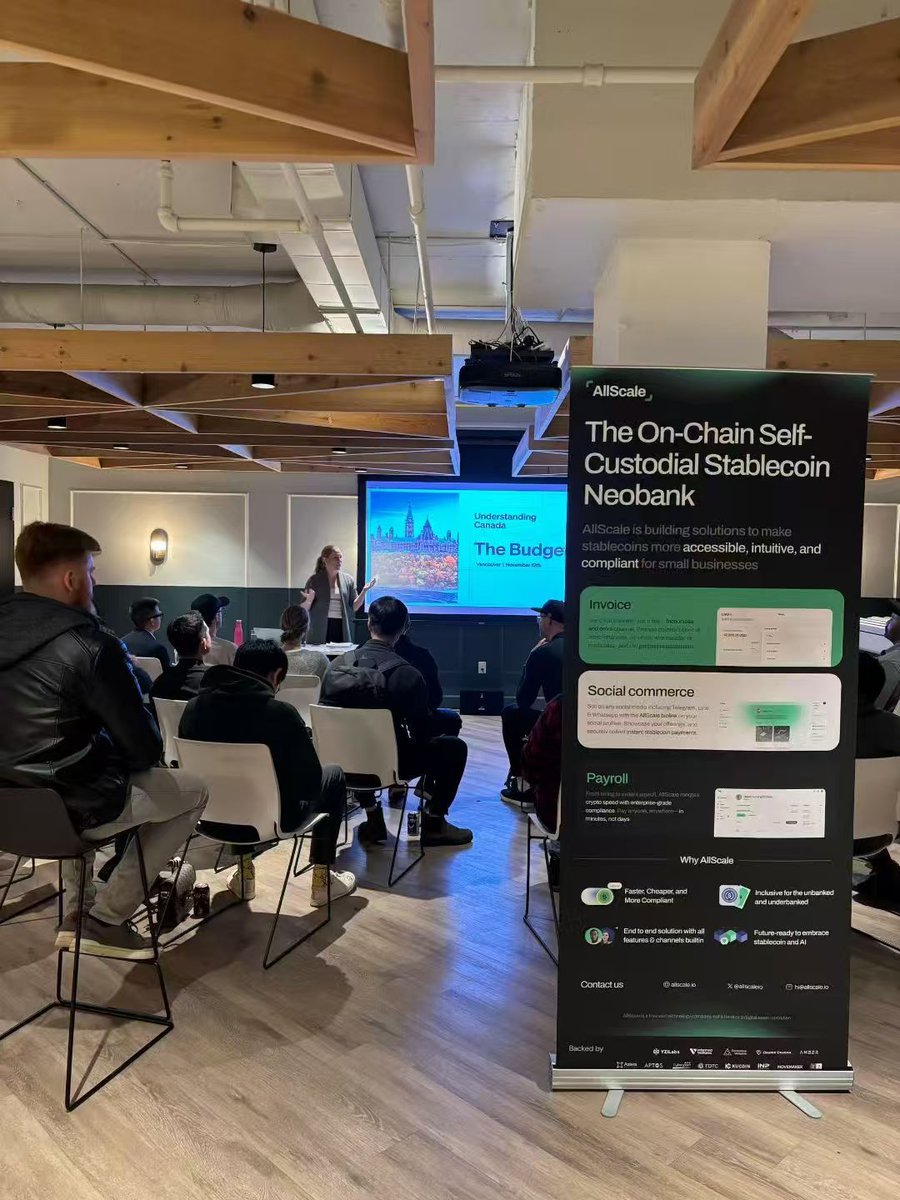
Thanks to our friend @AnnikaSays, @allscaleio also cohosted Build Canada's in-person budget reading session that helped us to understand the stablecoin legislation last year.
Here's the genuinely weird part. Until the federal law actually bites (~2027), there is no single way to issue a CAD stablecoin in Canada. Every player walked in through a different regulator's door. (Please please please remember, this is not legal or financial advice. You also definitely don't want to take legal advice from a software developer like myself.)
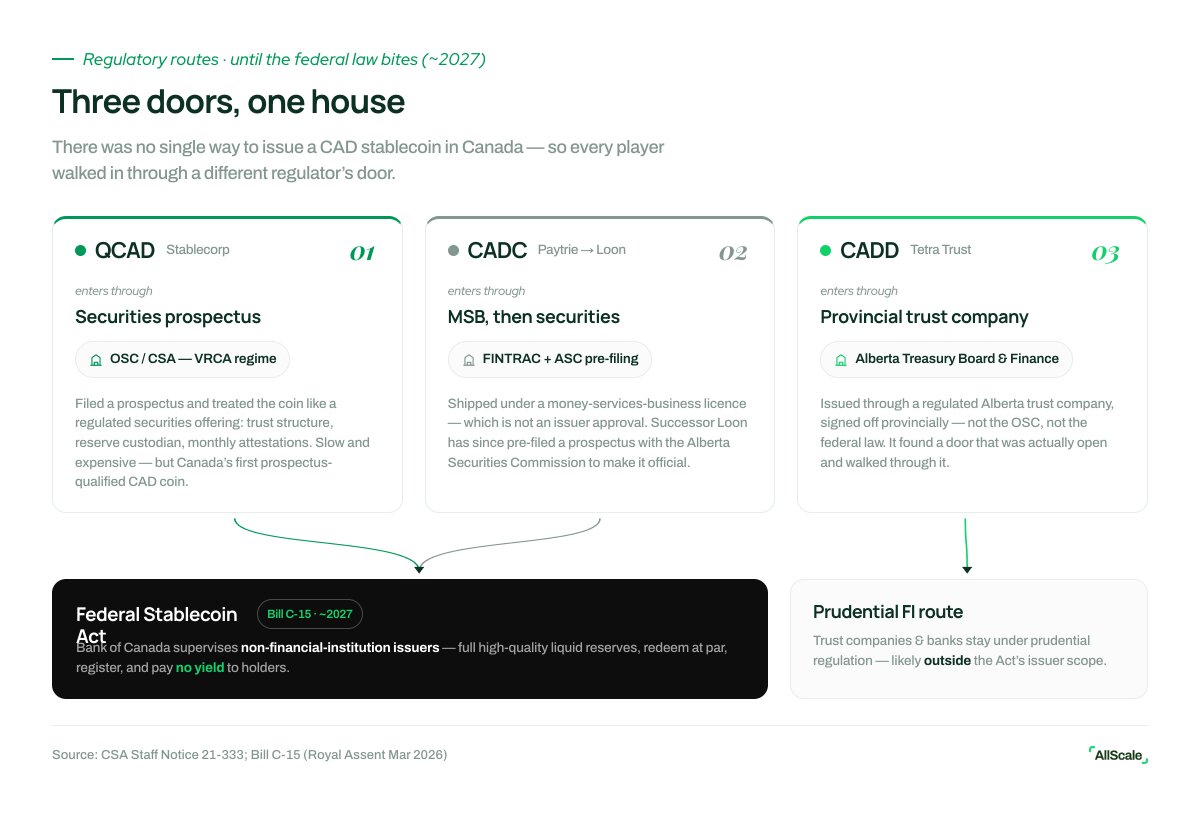
And then there's door number four, still under construction: the federal Stablecoin Act inside Bill C-15. Royal Assent March 26, 2026, expected in force around 2027. It hands supervision of non-financial-institution issuers to the Bank of Canada and tells those issuers to hold full high-quality liquid reserves, redeem at par, register, and (this one matters) pay no yield to holders.
That no-yield rule is sneaky important. It draws a hard line: stablecoins pay you nothing, tokenized bank deposits can pay interest. Which is exactly why VersaBank now frames its tokenized-deposit pilots as interest-bearing "Real Bank Deposit Tokens" instead of calling them stablecoins. Different label, different rulebook, can pay yield.
Bottom line: Canada didn't freeze stablecoins on purpose. It just left them stranded between regulators who could each say "not my problem" or "that's a security." The 2026 law is the first real federal front door for non-bank issuers.
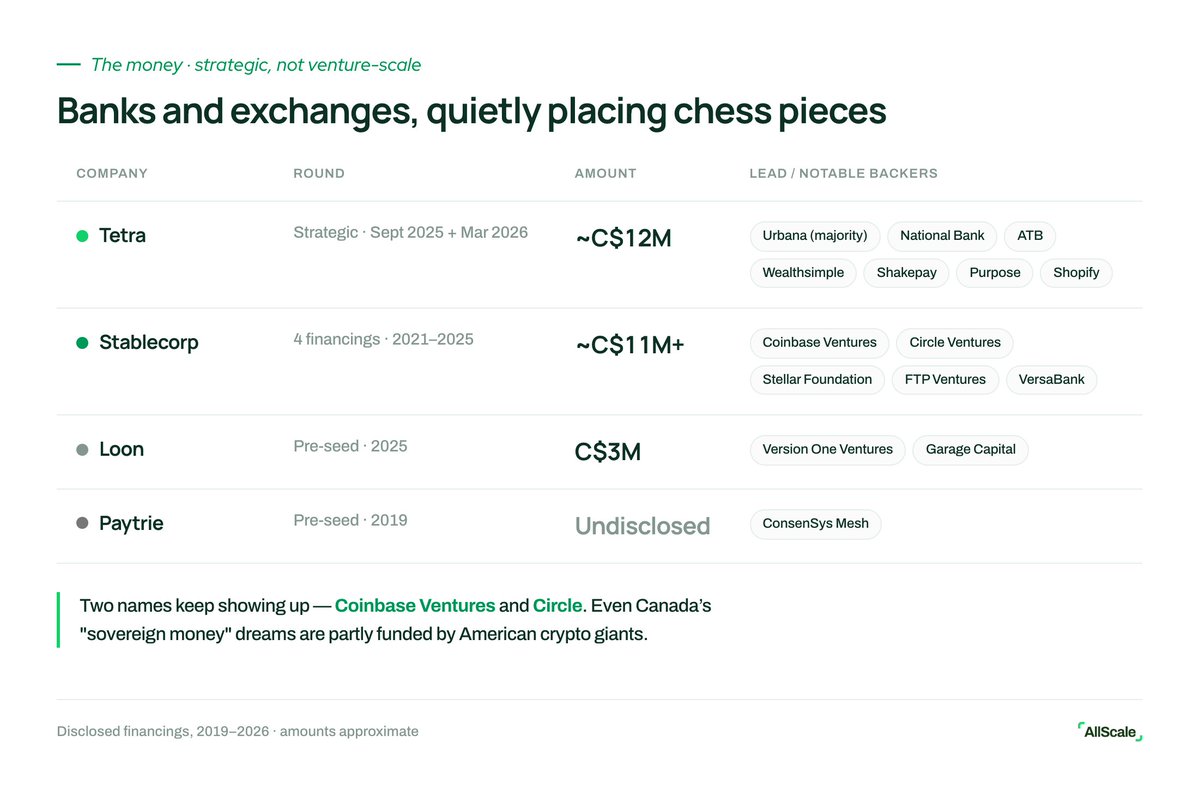
Now here's what makes this fun. These "competitors" are basically one extended family. A few patterns explain almost everything:
1. Calgary is the capital, not Toronto. Three of the four issuers (Tetra, Loon, Paytrie) are in Alberta, pulled in by its trust-company and securities setup. CADD is approved by Alberta's treasury. Loon pre-filed with the Alberta Securities Commission. Canada's stablecoin scene didn't grow on Bay Street. It grew on the Prairies.
2. It's a ConsenSys / Deloitte alumni reunion. Paytrie/Loon's Kevin Zhang (@kevinzhangTO) and Henry Chan are both ex-ConsenSys. Mavennet's Patrick Mandic @patrickmandic and Kesem Frank @kesemfr are ex-Deloitte, and both worked on Aion, Canada's homegrown public blockchain (Frank also led blockchain work at Deloitte). Frank co-founded a fund (Bicameral Ventures) with Stablecorp's founder Alex McDougall. The "rival" companies are run by people who've worked together for ten years.
3. The plumbing is shared. Tetra Trust custodied QCAD's reserves, and its parent group issues CADD. One little Calgary trust company, sitting under two rival coins. (It handed QCAD custody over to VersaBank in Feb 2026, more on that in a sec.)
4. VersaBank's arc is the entire story in miniature. It led Stablecorp's 2021 round. It co-built VCAD with Stablecorp. It watched its own coin die in pilot. And in February 2026 it became the reserve custodian for Stablecorp's QCAD (taking over from Tetra Trust). The bank that tried hardest to ship a CAD stablecoin now makes money guarding a competitor's.
Nobody raised a monster round here yet like in the US. This is banks, exchanges, and crypto funds quietly placing some bets first.
However Canada always has some of the best talents in FinTech and Crypto. We at @allscaleio are also just getting started. Hope to see what's coming next!
If you are also building in the stablecoin space or are interested in learning how to embed stablecoin payin/out into your current business flow, I'm always happy to chat!