
By AllScale Editorial · Updated October 26, 2026 · 18 min
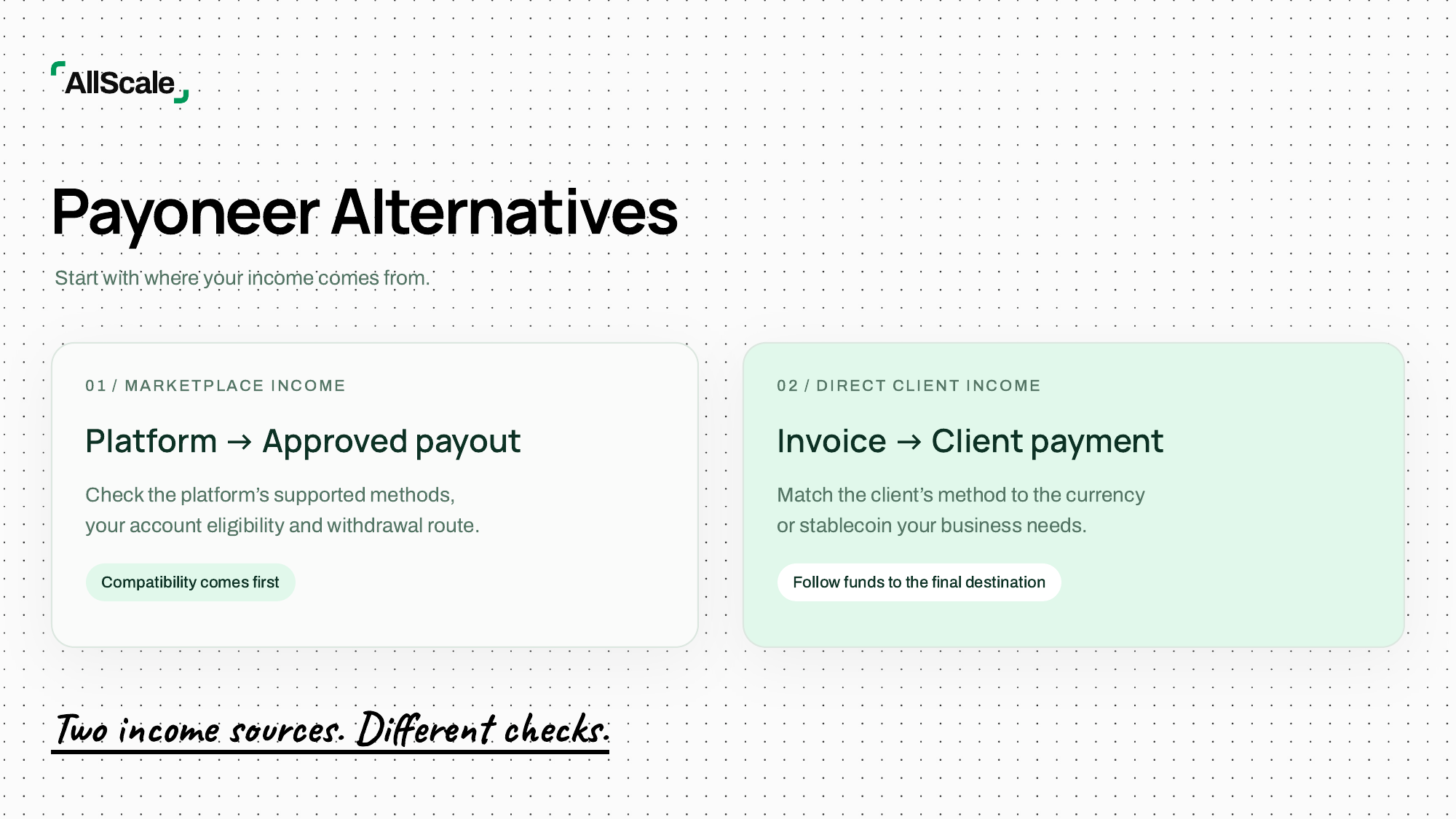
When comparing Payoneer alternatives, first separate marketplace payouts from payments made directly by a client. A service that works for a client invoice may not receive funds from your marketplace. Check the payment source, your eligibility and the full withdrawal path before switching.
This guide compares five alternatives—Wise, PayPal, Airwallex, Acctual and AllScale—with Payoneer as the baseline. The practical question is whether each option can take your particular income all the way to funds you can use.
TL;DR: recommendations by income source
- Payoneer — best considered as the baseline for an existing, supported marketplace payout. Keep a working route until its replacement has been verified.
- Wise Business — best shortlisted for direct clients who can pay through supported bank details. Check business eligibility and receiving-currency access first.
- PayPal — best shortlisted when clients want its invoice payment options, or a marketplace explicitly offers it. Compare the relevant commercial fees and withdrawal conditions.
- Airwallex — best shortlisted when client collection is part of a wider business account and currency-management requirement. Account approval and merchant acceptance are separate checks.
- Acctual — best shortlisted for invoice-led collections with an eligible bank or wallet destination. Confirm current onboarding and payment-method access following its announcement that it is joining Altitude.
- AllScale — best shortlisted for direct client invoices where stablecoin receipt is useful. Confirm the exact payer method, token, network and any subsequent bank withdrawal.
These are use-case recommendations, not a performance ranking. None establishes support for an unnamed marketplace.
Quick comparison of Payoneer alternatives
Official sources checked October 24, 2026. Pricing references below are examples from the linked schedules, including US-specific pages. They are not matched quotes for the same transaction. Detailed sources and qualifications appear in each profile.
The distinction between a managed balance and a self-custody wallet concerns control of funds. It does not establish the same legal protections across providers or eliminate payment-processing and compliance conditions.
Why you can trust this review
AllScale publishes this article and is included in the comparison. We reviewed official product pages, pricing schedules and eligibility guidance, then compared the same practical questions: where income originates, who can open the account, how the payer pays, what the business receives and how it reaches its final destination.
We did not open accounts, run transactions or obtain identical live quotes from these six services. Recommendations reflect documented scope and operational fit. Profile numbers organize the review; they do not rank providers by speed, reliability or support quality.
Marketplace compatibility requires evidence from the platform or provider for that particular connection. We use Upwork as a documented example below; we do not extend that evidence to other marketplaces.
How to choose a Payoneer alternative
Choose by how clients pay you
For marketplace income, start inside the platform's withdrawal settings. Identify the methods available to your account, the beneficiary-name requirements and any activation delay. Then check whether the receiving service accepts that payout. Having local bank details alone does not prove compatibility.
Upwork's official guidance lists PayPal and Payoneer among its third-party withdrawal options, with availability depending on location; it specifies Payoneer outside the US. Its PayPal instructions say to choose another method if PayPal is not shown and describe a three-day security hold after adding it. That is evidence for an eligible Upwork route, not a promise for every user. Upwork withdrawal options; Upwork's PayPal setup guidance.
For direct client invoices, ask the client's accounts-payable team what they can use. A bank-paying business may require beneficiary details, an invoice reference and supplier onboarding. Another client may want a card payment link. A stablecoin-paying client needs an agreed asset and network. Choose among services that satisfy that requirement before comparing charges.
If the work originated on a marketplace, changing the withdrawal destination is different from asking the client to pay outside the platform. Follow the platform's contract and payment rules when deciding whether direct invoicing is permitted.
Follow the money through to usable funds
A payment can appear in a provider balance before it reaches the bank account you use for rent or payroll. Define the destination before calling a route complete.
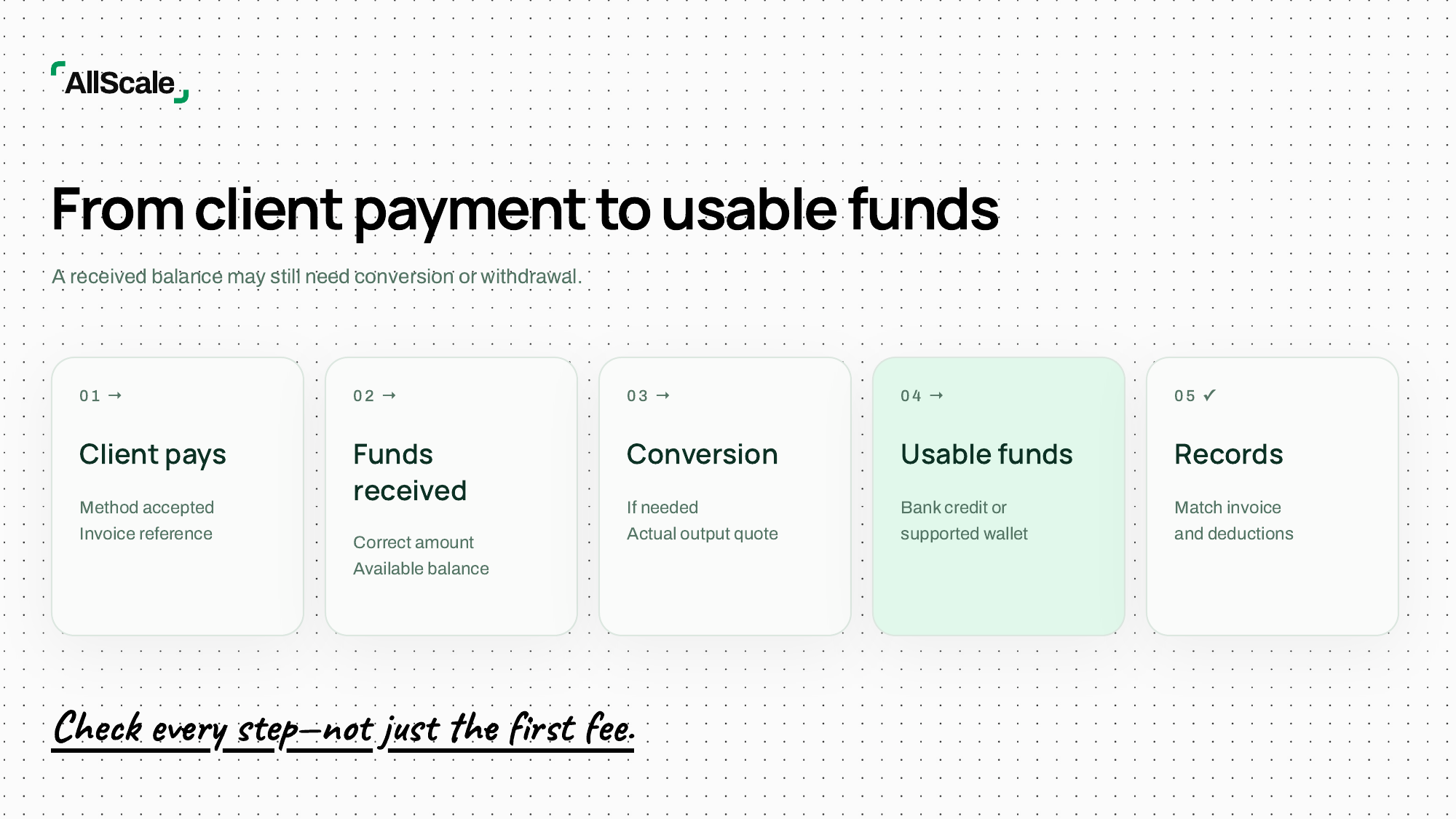
Record who can approve a refund and how it will be funded. A payment method's dispute rules and an invoice's refund terms are different matters. Also check whether original processing charges are returned, whether conversion happens again and which payment reference links the refund to the sale.
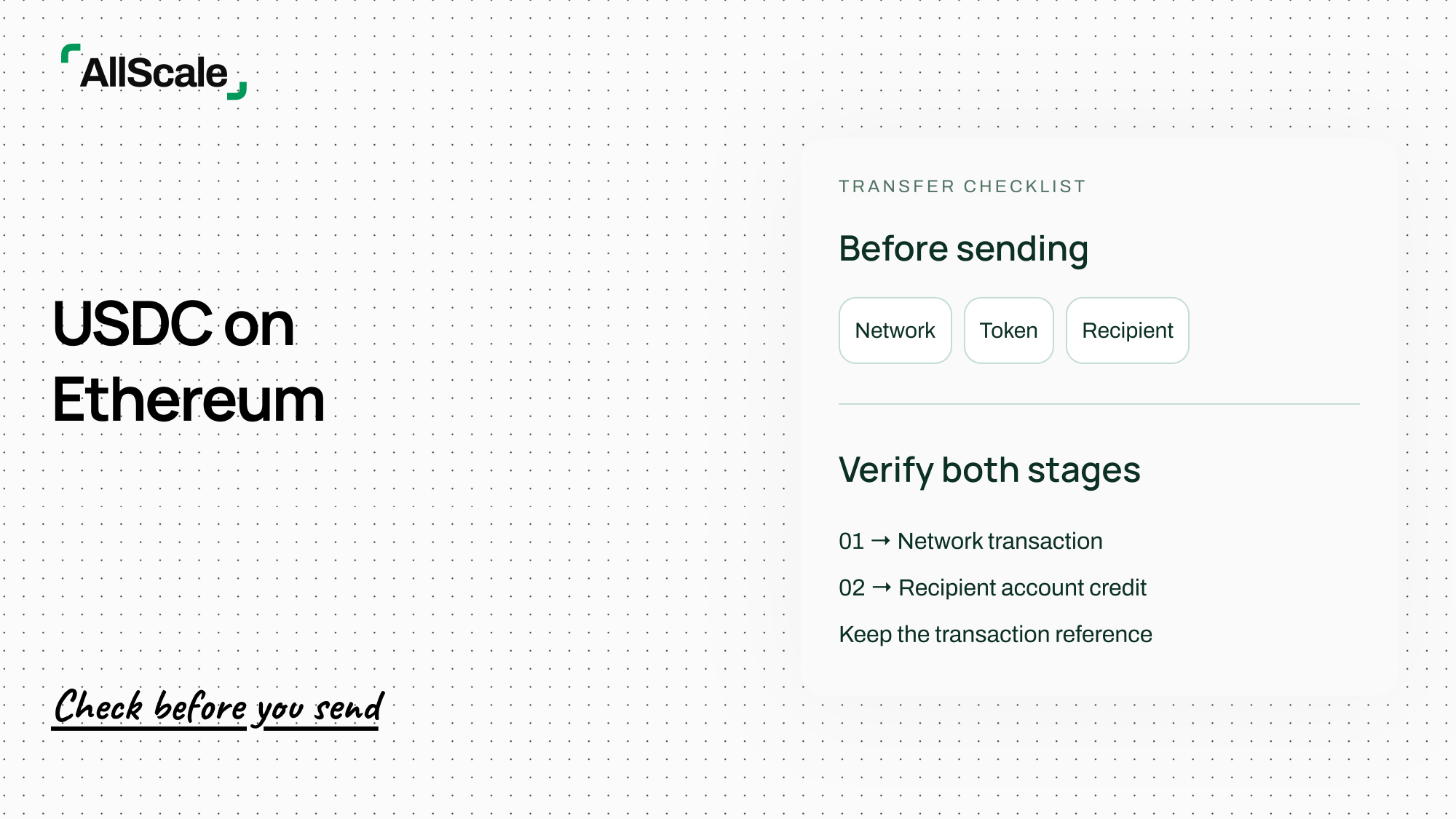
For self-custody receipt, decide who controls account access and authorizes outgoing payments. For provider-held funds, check the conditions for availability, withdrawal and account review. If bank money is the final requirement, an on-chain confirmation is only one stage of the process.
Plan a controlled changeover
Before updating recurring clients or outstanding invoices:
- List unpaid invoices, pending payouts, refunds and disputes on the existing route.
- Export statements and payment references you will need after the change.
- Complete the new service's verification and confirm each client's payment method.
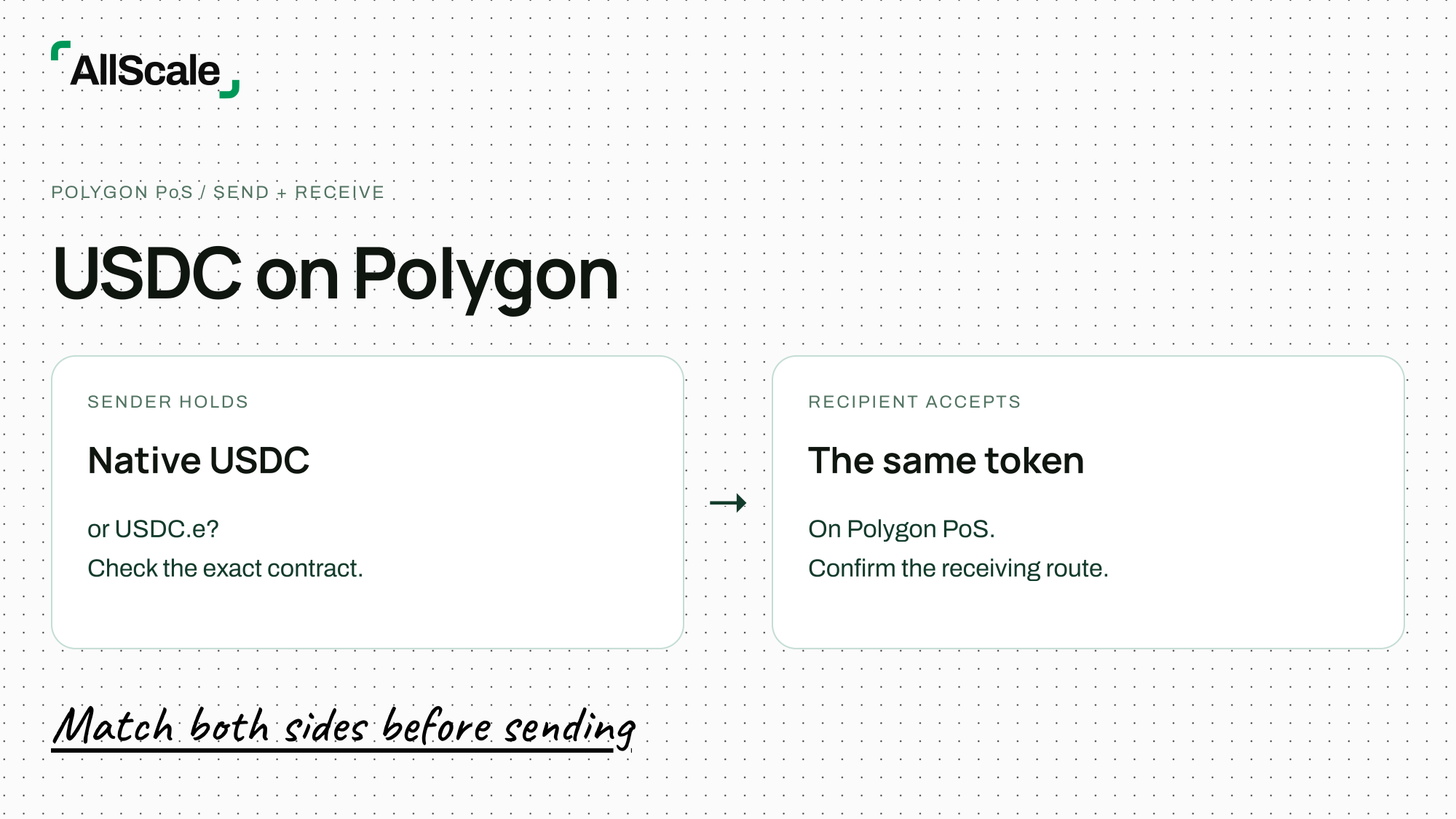
- Verify the beneficiary instructions independently, including the token and network where applicable.
- Test a permitted amount above any minimum and confirm receipt at the intended destination.
- Update the relevant invoice and tell the client exactly when the new instructions apply.
- Reconcile the first payments before expanding the change to other clients.
Keep the old route available for unresolved transactions where permitted. Do not send a second payment request simply because the first transfer has not yet arrived; trace the existing reference first.
A client notification you can adapt
Copyable email template for readers. The bracketed fields below are intentionally editable; replace them before sending. Put verified account or wallet instructions in the updated invoice rather than copying an unverified address into an email.
Subject: Updated payment instructions for invoice [invoice number]
Hi [client name],
For invoice [invoice number], please use [new supported payment method] and the verified receiving instructions in the updated invoice: [invoice link]. These instructions apply from [effective date].
If payment is already in progress through the previous method, please share its reference before making another payment. If the new method does not work for your team, contact [named contact and established contact channel] so we can agree on another supported option.
Thank you, [sender name]
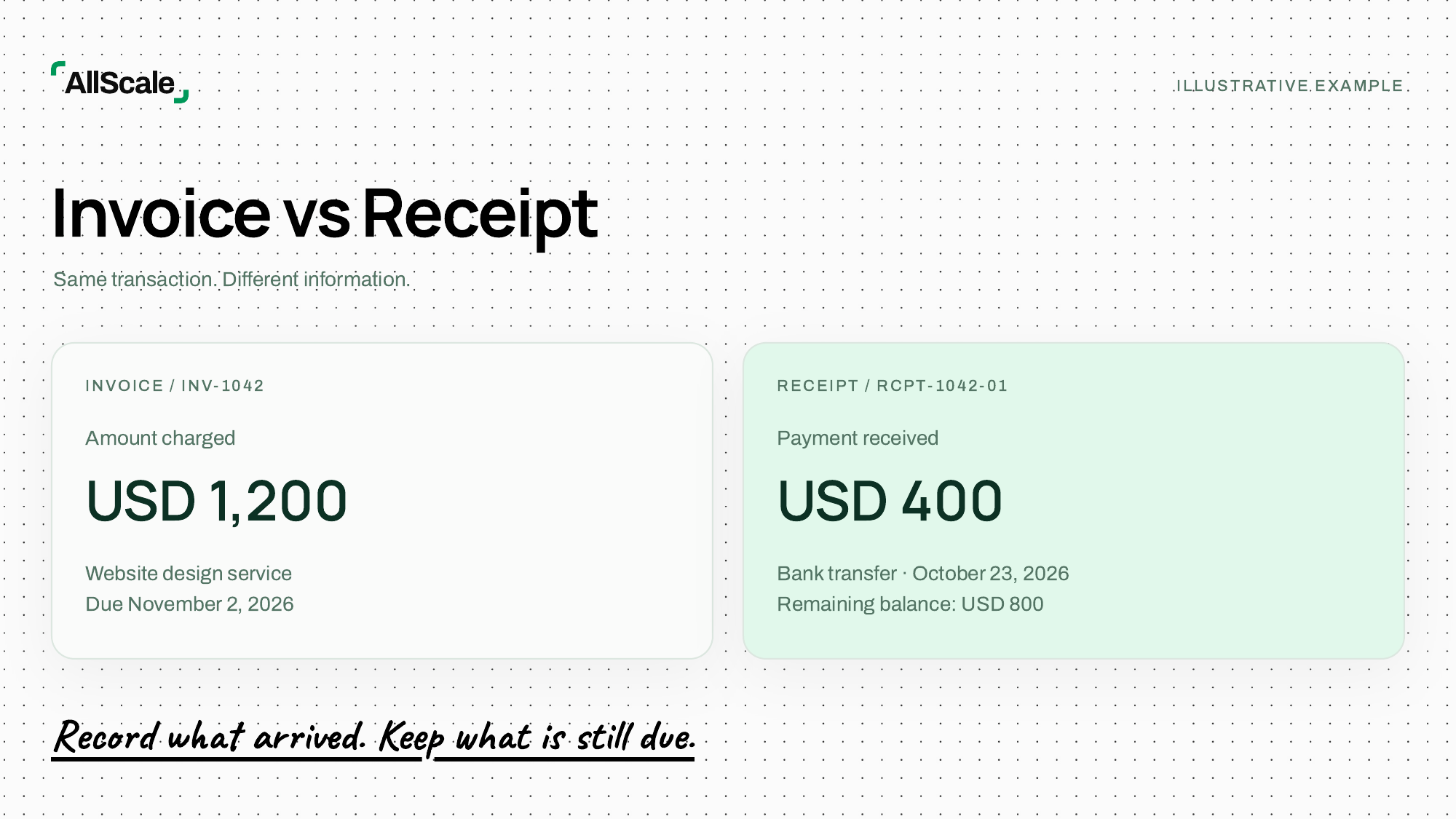
For example, a fictional agency could write: “For invoice INV-1042, please use EUR bank transfer and the verified beneficiary details in the revised invoice attached. These instructions apply from November 2, 2026. If you have already paid, send the transfer reference to Maya through our existing project email thread before taking further action.” This example specifies a document, method, date and contact without inventing usable bank details.
1. Payoneer: the marketplace baseline
Overview
Payoneer combines supported marketplace payouts with receiving accounts and direct payment requests. Its receiving-account service is subject to the relevant payer and currency requirements. Payoneer receiving accounts.
Best For
A freelancer or business with a working platform connection whose main concern is what happens after the platform pays out.
Key Features
Receiving details, payment requests and bank withdrawals serve different collection steps. Payoneer also describes a Bridge-provided stablecoin service with phased availability and eligibility conditions; it should not be treated as a universally fiat-only service. Payoneer stablecoin service.
Pros
An existing supported connection gives you a concrete benchmark: actual deductions, withdrawal timing and records from your own transactions.
Cons
A marketplace payout and a direct client payment can carry different charges. Receipt into the account is not the same as the final bank credit, and access to one product does not guarantee access to another.
Pricing
The public schedule lists direct card payments at up to 3.99% plus USD 0.49, US ACH debit at 1%, and marketplace charges as varying by platform. Withdrawal charges depend on the route and may include minimums. Check the quote for your location and currency. Payoneer pricing.
Why We Picked It
A replacement should improve a specific part of the existing process. Keeping Payoneer in the comparison prevents a low collection fee elsewhere from obscuring an incompatible payout route.
2. Wise Business: direct bank-paying clients
Overview
Wise Business offers supported currency balances and receiving details. It is a candidate when a client is willing to make a bank payment and the account features are available to your business. Wise Business.
Best For
Direct B2B collections where the client needs conventional payment instructions and you can evaluate receipt, conversion and onward transfer separately.
Key Features
Receiving details and currency management, subject to account availability. Wise's eligibility guidance includes freelancers and sole traders but says support depends on the business's country and activity. Wise business eligibility.
Pros
It gives bank-paying clients a route worth comparing without requiring a card-based invoice checkout.
Cons
Do not assume a Wise receiving account is approved for a specific marketplace. Different incoming transfer types also have different costs.
Pricing
The US business page lists a USD 31 setup fee, sending/conversion from 0.23%, and USD 6.11 for receiving USD wire and SWIFT payments. These are separate charges for different activities, not one combined quote. Wise US business pricing.
Why We Picked It
It tests whether your real need is bank-based client collection rather than a replacement for every Payoneer product.
3. PayPal: invoice payments and explicitly supported platforms
Overview
PayPal offers shareable invoices with payment options that vary by location. It can be evaluated for direct collections and, separately, marketplace payouts where the platform supports it. PayPal Invoicing.
Best For
Clients who prefer available PayPal or card payment options, and users with a documented platform connection such as the eligible Upwork route discussed above.
Key Features
Invoice links and payment management, with dashboard and API options. Country-level invoicing availability does not establish that every payment method or withdrawal option is enabled. PayPal invoicing documentation.
Pros
It offers a client-facing invoice flow, so collection can begin with a document and a payment action in the same process.
Cons
Payment type, international status and conversion can change the cost. Verify receiving and withdrawal access in your country, plus the conditions affecting funds availability and disputes.
Pricing
For US domestic invoicing, PayPal lists standard card payments at 2.99% plus the currency's fixed fee and PayPal Checkout at 3.49% plus that fee. The USD fixed fee is USD 0.49. International invoicing adds 1.50%; conversion and withdrawal must be assessed separately. PayPal US merchant fees.
Why We Picked It
It is relevant on both sides of the income-source distinction, provided the direct collection or marketplace connection is verified independently.
4. Airwallex: collections within a business account setup
Overview
Airwallex combines business accounts with separate payment acceptance and billing products. That broader scope matters when collecting invoices is one part of a company's currency and spending operations. Airwallex business accounts.
Best For
Businesses evaluating collection, currency balances and outgoing payments together.
Key Features
Global Accounts, currency management and available merchant payment products. US company verification includes entity and ownership information; other jurisdictions have their own requirements. Airwallex US verification.
Pros
A team can assess whether receiving and later spending the same currency reduces unnecessary conversion steps.
Cons
Business-account access is not proof of merchant-product approval or marketplace compatibility. Check the particular collection method and settlement destination.
Pricing
The US Explore plan lists USD 0 per user/month. The FX schedule lists 0.5% above interbank for major currencies and 1% for others; payment processing and certain transfers have separate pricing. A free plan does not make every collection free. Airwallex US pricing.
Why We Picked It
It addresses a broader business-account requirement than sending an invoice alone.
5. Acctual: invoice-led bank and wallet receipt
Overview
Acctual advertises invoicing with card, bank and stablecoin payment options and direct bank or wallet receipt. Its website also announces that Acctual is now part of Altitude. Confirm current signup, contracting entity and service conditions when evaluating a new account. Acctual product; Altitude announcement.
Best For
Freelancers or businesses that primarily need to send direct client invoices and receive funds at an eligible destination.
Key Features
Invoice generation and accounting connections. Its eligibility guide lists the US, EEA, Canada and Australia for card and bank-transfer collections, with beneficial-owner nationality also relevant. Stablecoin routes have a separate coverage policy, including a stated New York exclusion. Who can use Acctual.
Pros
Its invoice-first design is relevant when your problem is direct collection rather than a marketplace withdrawal integration.
Cons
Country and payment-method restrictions matter. The reviewed sources do not establish a specific marketplace payout connection or justify treating advertised payout speed as a guarantee for every transaction.
Pricing
The pricing page advertises USD 0/month, 2.7% for card payments and 1% for bank transfers. Confirm conversion, output currency and the final settlement quote for the actual route. Acctual pricing.
Why We Picked It
It provides a useful comparison for invoice-led collection with a bank or wallet endpoint, subject to current eligibility.
6. AllScale: direct invoices with stablecoin receipt
Overview
AllScale Invoicing offers shareable invoice links and describes stablecoin settlement with on-chain and enabled fiat payment options. The method available to your client must be confirmed for the actual flow. AllScale Invoicing.
Best For
A direct business relationship where receiving a supported stablecoin is useful and the payer can use an available payment method.
Key Features
Invoice creation, shareable links and payment-status tracking. AllScale's self-custody payment model differs from a provider-held fiat balance. Confirm the supported asset and network, including any conversion needed afterward. AllScale Checkout.
Pros
The invoice and collection task can be evaluated around the asset the business actually wants to receive, rather than assuming it must first accumulate a fiat balance.
Cons
This review does not establish AllScale as a receiving option for a named marketplace. Bank withdrawal is a separate requirement to verify. Jurisdiction and channel restrictions still apply, and self-custody requires clear access and authorization procedures. AllScale agreement.
Pricing
A universal all-in tariff was not established from the reviewed pages. Check the charges shown for the chosen payment flow, plus any conversion and withdrawal. Gas abstraction does not establish that every stage is cost-free.
Why We Picked It
It serves a distinct collection outcome: usable stablecoins for a direct business payment. If the business instead needs a particular fiat bank credit, that full route must be demonstrated first.
Feature comparison matrix
“Not evaluated” is not a claim that a provider lacks the feature. “No specific connection established” means it should not be selected for marketplace income on this article's evidence alone.
Pricing comparison: measure the amount you can actually use
Separate collection fees from conversion and withdrawal. Include setup or subscription charges in a monthly comparison, and retain the quote's conditions. Do not apply one provider's domestic card rate to a different provider's international bank receipt and label the result a price ranking.
A useful comparison fixes the client country, business country, payer method, invoice currency, destination and timing requirement. It then records the gross payment, each deduction and the final net amount.
Illustrative arithmetic, not provider quotes. Suppose a French agency invoices a US client USD 2,000 and needs EUR in its French bank account. Both hypothetical routes accept the same US bank payment. These figures exclude taxes and any charges beyond those listed; no delivery-time promise is assumed.
Route B charges less for collection but delivers EUR 5.70 less to the bank. The calculation uses the quoted conversion rate once; adding an FX margin again would double-count it if already included.
For a stablecoin option, decide whether the endpoint is the wallet asset or bank currency. If the agency needs EUR, include every required conversion and withdrawal step. A USD-denominated token amount alone cannot establish the EUR bank receipt or timing.
Which Payoneer alternative should you choose?
Start with the payment source:
- Keep Payoneer if the marketplace route works and no verified replacement improves the full process enough to justify changing it.
- Choose Wise Business if a direct client can pay your eligible bank details and the complete receipt-to-use cost works for your business.
- Choose PayPal if the client prefers its enabled invoice methods, or your platform explicitly offers the relevant payout connection.
- Choose Airwallex if approved collection and currency-account products solve a broader operating need.
- Choose Acctual if direct invoicing is the main task and its current eligibility, settlement route and service conditions fit.
- Choose AllScale if supported stablecoin receipt fits the business and the payer's available method is confirmed.
Using two services can be sensible: retain a supported marketplace route and add a different tool for direct invoices. There is no operational benefit in forcing both income sources into one account if that creates extra conversion, exceptions or client friction.
For AllScale, keep collection and payouts distinct. Invoice requests money from a client. Payroll addresses team payouts, while Claim Link sends funds for a recipient to claim. Neither payout product establishes that a marketplace can send earnings into your account.
Frequently asked questions
Can every Payoneer alternative receive marketplace payouts?
No. Check the platform's available withdrawal methods and the receiving service's rules for that specific route. A direct invoice link or bank account number alone does not prove support.
How should I compare withdrawal costs?
Follow the funds from the original payment to the asset or account you will use. Include receipt, conversion and withdrawal charges, minimums and any relevant account costs. Compare equivalent destinations and methods.
Can I move all clients to a new method at once?
First confirm that each client can use it. Verify the receiving instructions, complete an appropriate test and specify which invoices the change covers. Track payments already in progress to avoid duplicate collection.
Is a payment notification proof that funds reached my bank?
Not necessarily. Check the available balance, any conversion and the final bank credit. Match those records to the invoice rather than relying only on a payer's screenshot or a notification.
Are stablecoins an option only through AllScale?
No. Acctual documents stablecoin routes, and Payoneer describes a Bridge-provided service. Compare the exact asset, network, control of funds, eligibility and destination rather than treating all stablecoin products as equivalent.
Do I need to close Payoneer after adding another service?
Adding another collection method does not inherently require closing the old account. Review its costs and terms, preserve necessary records, and resolve outstanding payments before deciding whether to keep it.
Choose a route your clients can actually use
Make the first switch small and specific: one eligible client, one invoice and one verified destination. Keep the transaction records, compare the amount received with the quote and resolve exceptions before changing the rest of your billing.
If the intended destination is a supported stablecoin balance, explore AllScale Invoicing and confirm the available payer method. If the income comes from a marketplace, begin with that platform's payout settings.