
Payment in arrears can mean an agreed payment after work has been performed. For a service business, that might mean completing November’s work, issuing an invoice on 1 December and receiving payment by 15 December. Work has already happened, but the invoice is not overdue before its agreed deadline.
Consider a consultant who invoices USD 1,000 for services delivered from 1–30 November 2026. The client approves the work, and the consultant issues invoice INV-601 on 1 December with payment due on 15 December. If only USD 400 has been confirmed received and applied by that deadline, USD 600 is overdue on 16 December. These dates and amounts are illustrative.
Before using this arrangement, agree the service period, approval owner, billing trigger and payment deadline. Put the resulting dates in the invoice and the customer’s payment schedule. “Paid in arrears” alone leaves too much room for each side to expect something different.
Set the service period and billing trigger
Define the work covered by each payment. A monthly consulting engagement might cover all agreed services from the first through the last day of the month. An hourly contractor might invoice approved hours for a stated period. A project may use acceptance of a particular deliverable as its billing trigger.
Billing in arrears describes billing after the service is provided, as explained in Zuora’s billing-timing documentation. It does not, by itself, specify how many days the client has to pay after receiving the invoice.
Write the trigger precisely: “Invoice issued on the first day of the following month for approved services” is more useful than “invoice later.” If approval is required, agree who reviews the work and when. A billing schedule that depends on approval needs a review process the client can actually follow.
Payment timing also affects the supplier’s cash planning. Under this example, the consultant covers the cost of November’s work before the December payment is due. If that wait is unsuitable, discuss a shorter service period or another agreed arrangement before work starts. To compare collecting funds before delivery, see the guide to payment in advance.
Separate completion, approval and invoice dates
Completing work, getting approval and issuing an invoice are separate events. They can happen close together, but recording one does not establish the others. Keep the service evidence and approval attached to the invoice reference.
The following record supports the example throughout this guide. Assume the client approves all USD 1,000 of November services, with no credits, fees or disputed amounts.
| Field | Illustrative record |
|---|---|
| Service from | 1 November 2026 |
| Service to | 30 November 2026 |
| Work completed | 30 November 2026 |
| Approval owner | Client project lead |
| Approval date | 1 December 2026, before invoice issue |
| Approved amount | USD 1,000 |
| Invoice issue date | 1 December 2026 |
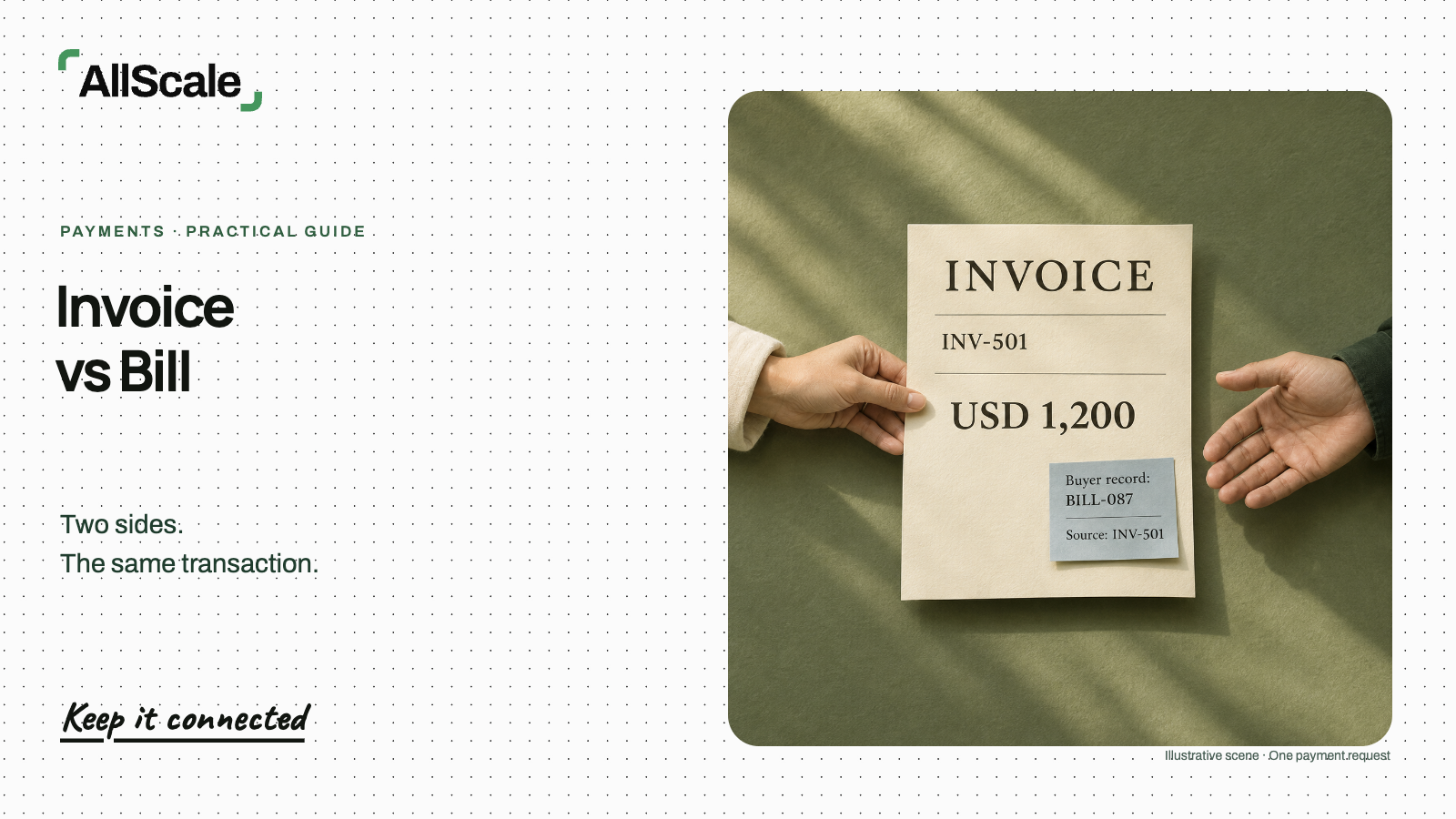
| Invoice reference | INV-601 |
| Agreed due date | 15 December 2026 |
For hourly work, retain the hours, rate and approved scope behind the amount. For a fixed service fee, retain the agreed deliverables or service period. The customer’s finance team should be able to understand the charge without reconstructing the project conversation.
If only part of the work is approved, identify that portion and label the rest “Pending approval” in the working record. Ask the client to resolve the outstanding items under the agreed process. Record any agreed changes before updating the invoice amount or payment schedule; a delayed approval should not silently rewrite the payment terms.
Turn the agreed term into a due date
A term such as Net 14 needs a starting event. Does the agreement count from invoice issue, invoice receipt or acceptance of the work? Confirm that event and whether the period uses calendar days or business days. Then state the actual due date.
In this example, the parties agree payment is due 14 calendar days after the invoice issue date. The invoice is issued on 1 December 2026, so the deadline is 15 December 2026: 1 December + 14 days = 15 December. The invoice can say: “Net 14 from invoice issue; payment due by 15 December 2026.”
| Date | Event | Status in this example |
|---|---|---|
| 1–30 November 2026 | Service period | Work recorded |
| 1 December 2026 | Work approved; INV-601 issued | USD 1,000 invoiced; payment term starts |
| 10 December 2026 | Payment deadline still ahead | Not overdue |
| 15 December 2026 | Agreed due date | Deadline for the USD 1,000 request; only USD 400 confirmed received and applied |
| 16 December 2026 | Remaining balance checked | USD 600 overdue |
Services delivered
Invoice issued → Payment due
14 calendar days
USD 1,000 invoiced − USD 400 received and applied
Illustrative timeline for INV-601. The service period ends before the payment deadline; only the unpaid balance becomes overdue after 15 December.
Check that the customer has entered 15 December in its payment schedule too. If a holiday, processing cutoff or payment transit time affects the plan, use the parties’ agreed treatment. Do not assume every business moves a deadline in the same way. Clarify whether the deadline concerns receipt of funds or another agreed payment event; this example uses confirmed receipt.
For other ways to express the start event and deadline, choose clear payment terms before sending the invoice.
Distinguish agreed arrears from an overdue balance
On 10 December, INV-601 covers completed work and has an outstanding amount, but its 15 December deadline has not passed. A routine reminder can reference the upcoming due date. Calling it overdue at that point would contradict the agreed schedule.
On 16 December, check the payment evidence before following up. In this example, USD 400 has arrived and been applied to INV-601. The remaining balance is USD 1,000 − USD 400 = USD 600. Follow up on USD 600, keeping the earlier payment visible.
The phrase “invoice in arrears” can be ambiguous in a conversation. Ask whether the person means an invoice issued after services or a balance past its deadline. Recording “Due 15 December; USD 600 open” gives the next person clearer information.
If the client says a transfer is pending, check its reference and status before treating it as received. If an amount is disputed, record the dispute separately and resolve it through the agreed process. For a balance that is past due, use the existing guide to handling an overdue invoice.
Keep changes and payment records attached
Keep the agreement, service record, approval and invoice together under INV-601. Attach any approved correction to the service period, amount or deadline, so both sides can identify the current version. A revised date in an email should also be reflected in the records used to schedule payment.
A short statement can make the intended sequence explicit. This completed example is wording for the parties to review and adapt to their actual arrangement:
Services cover 1–30 November 2026. Invoice issued on 1 December 2026 for the approved services. Payment is due by 15 December 2026, 14 calendar days after invoice issue. Please use the invoice reference in your payment.
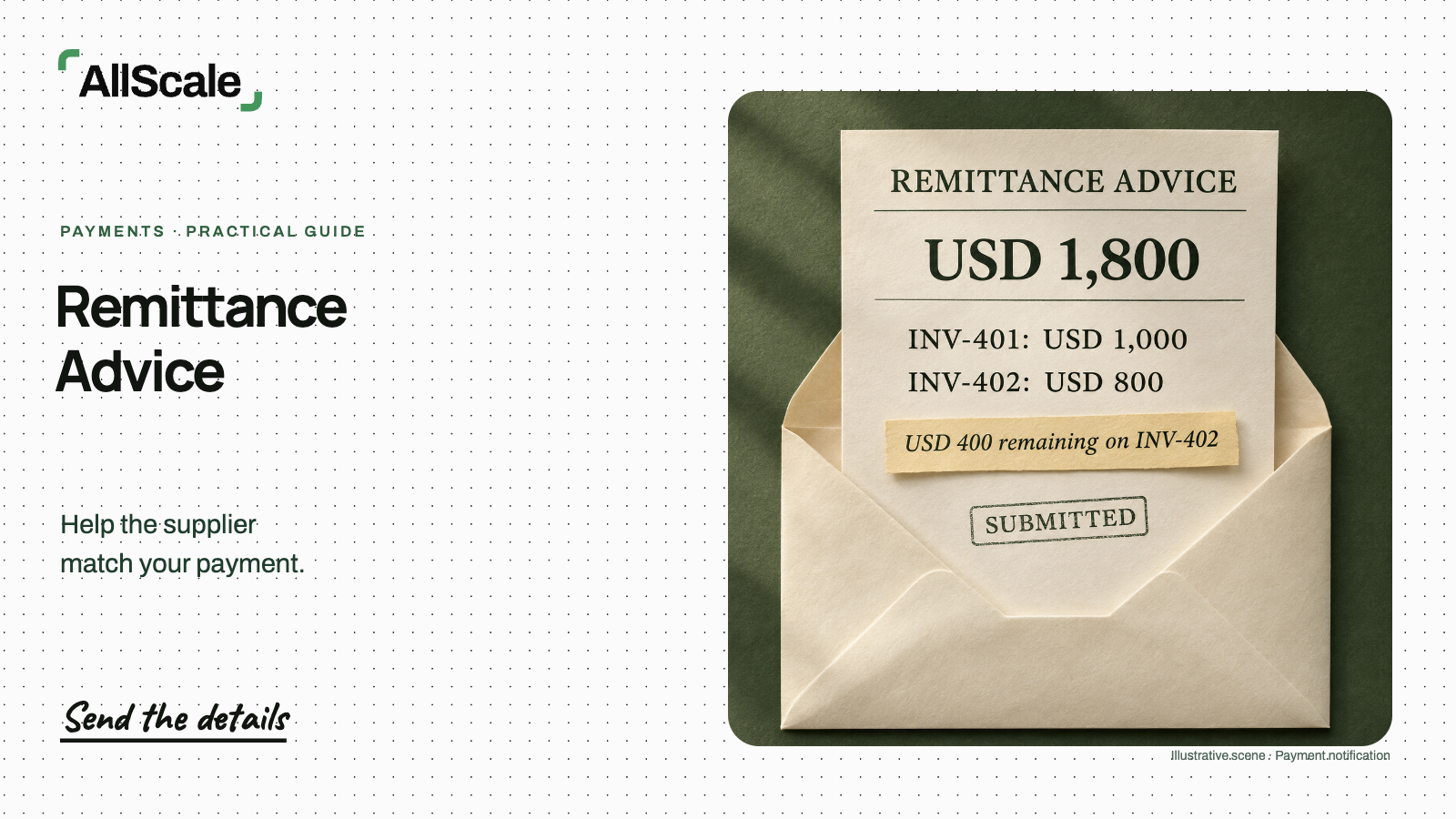
After a payment arrives, retain its date, amount, currency and transaction reference, then link the amount applied to INV-601. Update the remaining balance from the actual record. Once the last USD 600 is confirmed received and applied, the balance becomes zero, assuming no other adjustments.
You can create a service invoice with AllScale and share its payment link with the client. Agree the service period, approval process and due date with the client first. Keep the supporting work and approval records in your business workflow; sending a payment link does not establish those terms on its own.
Frequently asked questions
Does payment in arrears always mean late payment?
No. It can describe an agreed payment after the service period. Whether a balance is overdue depends on its actual deadline and the amount still open.
Which date starts the payment term?
Use the event stated in the agreement, such as invoice issue or acceptance. Confirm the counting rule and put the resulting due date on the invoice.
What if only part of the work is approved?
Identify the approved portion and resolve the remaining work with the client. Keep pending approval visible and document any agreed change before altering the invoice or schedule.
What should I do once the invoice is overdue?
Check payments, allocations and disputes first. Follow up on the remaining amount using the agreed deadline, retaining the payment history so earlier receipts are counted correctly.